
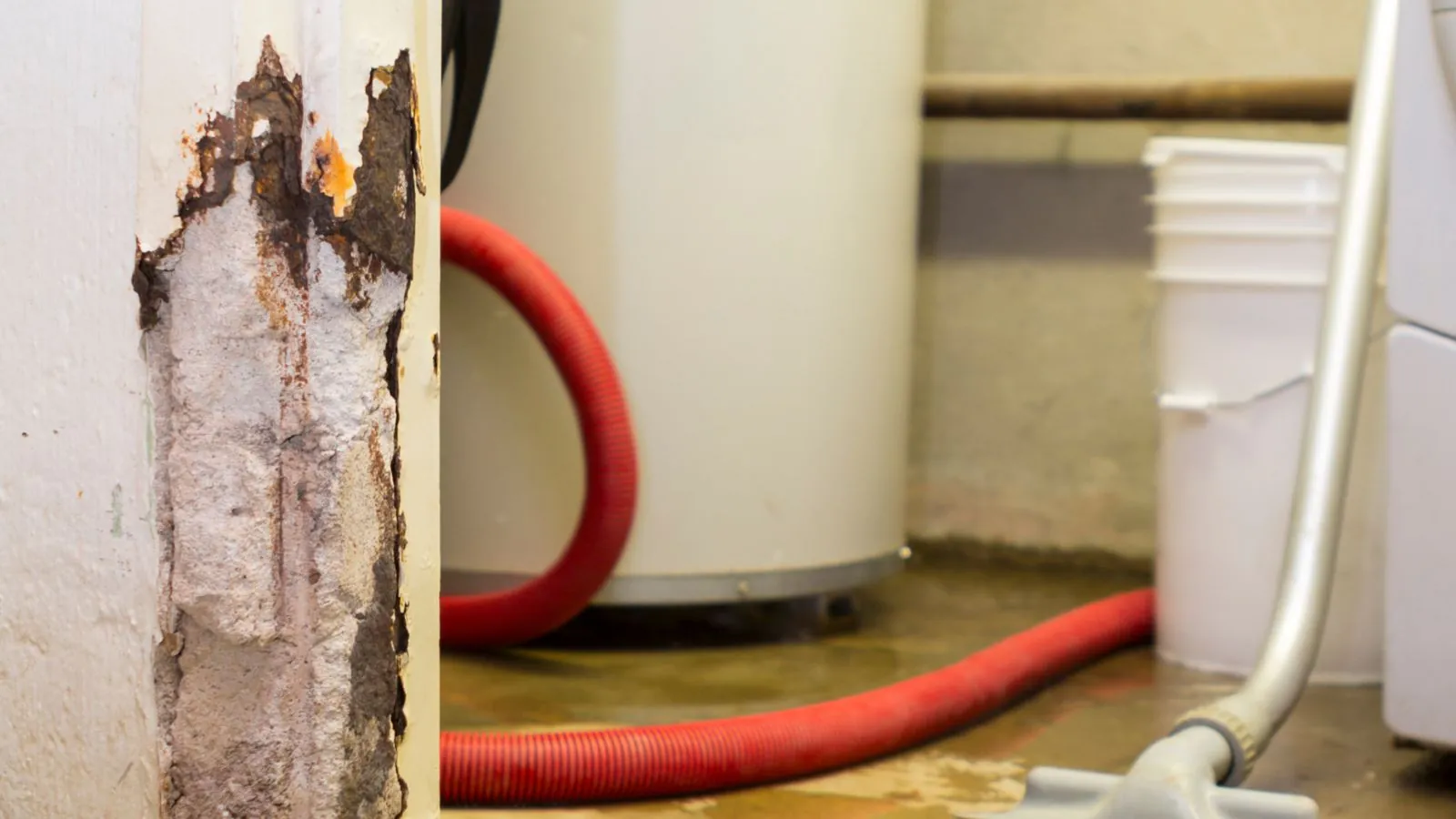
Emergency water extraction is the removal of standing water from a home or building with submersible pumps, wet vacuums and portable or truck-mounted extraction units. If water is pooled on your floor in Bellmore tonight, the 24/7 line is open, and what you do before a crew arrives decides how much has to be torn out later.
Stop the source if you safely can and keep everyone out of deep water. Do not walk into a room where water has reached outlets, cords or the breaker panel. Cut power only if the panel is dry and you can reach it without stepping in water, and call 911 or your utility first if there is any electrical or gas risk. Then call the dispatch line and tell us how deep the water is.
When standing water is an emergency
Treat any water deeper than the baseboard, or any water that is still rising, as an emergency. A shallow film left overnight wicks into drywall, swells carpet pad and slips under flooring, and each of those materials gets harder to save with every hour that passes.
The numbers explain why speed matters. One inch of water over a 1,000 square foot floor is roughly 620 gallons, and that weight does not stay on the surface. It moves into every porous material it touches.
Dirty water changes the job. If the water came from a toilet overflow, a sewer line or outdoor flooding, do not handle it bare-handed and do not run a household vacuum in it. Sewage backup cleanup follows stricter safety steps than clean supply water.
Electrical and gas safety comes first
Stay out of any room where water touches outlets, power strips, appliances or the breaker panel. Turn off power only if the panel is dry and reachable. If you smell gas or see sparks, leave the house and call 911 or your utility before you call us.
Call now, any hour. Same-day response is offered when available, and we explain the scope and price before work starts.
What extraction actually removes
Extraction is not the same as drying. It takes out the bulk water, the part you can see and the part trapped in carpet and pad, so the drying equipment that follows has far less to do. When we arrive we check depth, find drains and low spots, and decide which machine goes where.
Extraction ends when we can no longer pull loose water from the material. What remains is moisture inside walls, framing and subfloor, which is a drying job that starts with structural drying and dehumidification.
Pumps, wet vacuums and extraction units: what each one does
| Equipment | Best used for | Limit to know |
|---|---|---|
| Submersible pump | Several inches or more of standing water in a basement or lower level | Stops where the intake sits, so a thin film of water remains |
| Wet vacuum | Shallow water, corners and hard floors | Small tanks need frequent emptying and lift little water from carpet |
| Portable extraction unit | Carpet, pad and hard floors with a wand head | Pulls surface water but does not dry the material underneath |
| Truck-mounted extraction | Large areas such as shop floors or several rooms at once | Needs hose access and a clear path to the work area |
Three common situations and how each is handled
Several inches of standing water
Pumps go in first, with power off and hazards checked. The goal is to get the level below the baseboards quickly so the walls stop absorbing from the bottom.
A shallow film across a hard floor
Wet vacuums and squeegee heads handle it, and speed matters because water creeps under baseboards and into floor seams.
A soaked carpet and pad
The wand pulls water from the carpet, and the pad underneath often comes out because it holds water like a sponge and dries slowly.
Water in a finished lower level
We check what is stored at floor level, lift what can be saved and remove what cannot, then extract from the lowest point outward.
Bellmore low ground and water that comes back up the drains
South Bellmore, the area south of Merrick Road, has a record of water arriving from the street instead of the roof. Local press reported that during Hurricane Sandy in 2012 a tidal surge pushed water back through storm drains, and that several feet of water stood in parts of South Bellmore. In 2014, reports described about five inches of rain in six hours with water at Newbridge Road and Sunrise Highway.
The practical point is simple. Water that arrives from drains or from the street should be treated as dirty until shown otherwise, so tell the dispatcher where it came from. That decides whether we set up for clean-water extraction or contaminated-water protocols. Check the FEMA flood map for your address as well.
While you wait for the crew
- Photograph the water line on walls and furniture before anything moves. Your insurer will want dated photos.
- Lift small items, rugs and electronics onto counters or upper shelves, and put foil or plastic under furniture legs.
- Keep children and pets out of the water, especially if it may have come from a drain.
- Leave wet carpet in place unless a crew tells you otherwise, because it helps us see how far the water spread.
- Write down when the water started and what you think caused it.
What affects the cost of an extraction call
We explain scope and price before work starts. These are the factors that move the number most.
| Factor | How it changes the job |
|---|---|
| Depth and volume of water | More water means longer pump time and more hose and equipment |
| Water category | Clean water and contaminated water need different protective steps and disposal |
| Floor type | Carpet and pad take longer to extract than tile or sealed concrete |
| Access and distance | Stairs, narrow doors and long hose runs add labor |
| Time of day | After-hours dispatch is available, and the scope is explained before work begins |
Insurance often responds to sudden and accidental water, such as a failed supply line, and often does not cover damage from a slow leak left alone. Flood damage usually needs a separate flood policy, so check your policy or ask your insurer. New York State advises documenting your losses before cleanup.
After the water is out
Once the standing water is gone, the next call is how far it went. If the cause was a split pipe, burst pipe water damage explains what we check in the walls and ceiling below. If the water came from outside, flood damage cleanup covers the cleaning and the insurance questions that follow.
We answer calls from ZIP 11710 and the nearby South Shore towns on the same 24/7 line, including Freeport. After-hours and weekend calls are routine, and same-day response is offered when available.
Frequently asked questions
Yes. The dispatch line is answered 24 hours a day, every day, including nights, weekends and holidays. Same-day response is offered when available, and we cannot promise an exact arrival time.
For a thin film of clean water, a wet vacuum can help. For standing water, contaminated water or water near electrical items, wait for a crew. Never use a vacuum while standing in water.
Often the carpet can be extracted and saved, while the pad underneath is removed because it dries slowly. We explain which materials come out and why before work starts.
If it came from a toilet, a sewer line, a drain or outdoor flooding, treat it as dirty. Tell the dispatcher the source when you call so the right safety steps are used.
It depends on your policy and the cause. Sudden and accidental water is often covered and flood usually needs a separate policy. Check your policy or ask your insurer, and photograph everything first.
Extraction removes the loose water. Walls, framing and subfloor still hold moisture, so drying follows, and moisture readings tell us when the structure is dry.
Call the line any hour and describe what you see. We will explain the scope and price before work starts.