
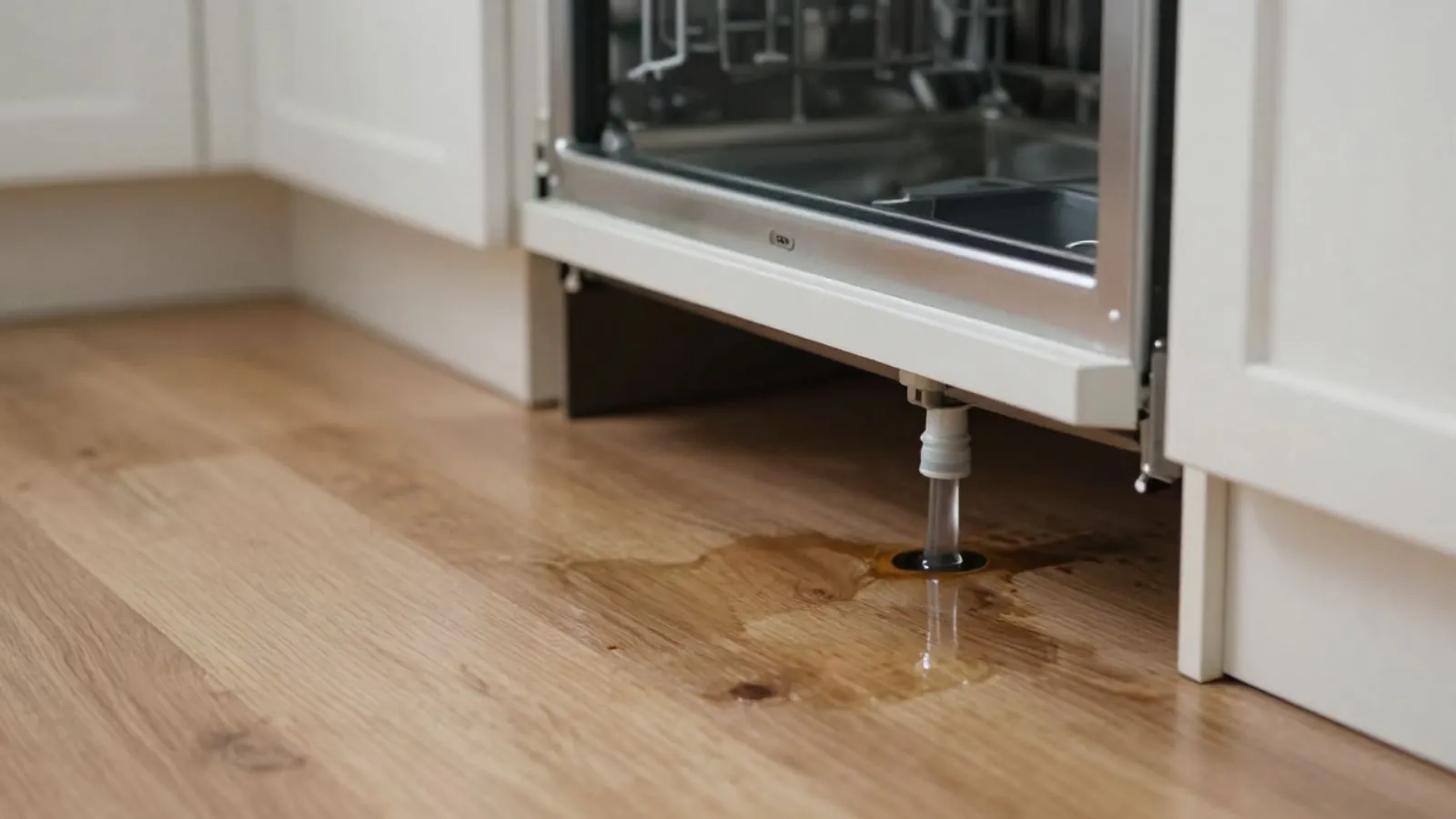
Appliance leak water damage is the wet flooring, cabinets and walls left behind when a washer, dishwasher, refrigerator line or similar appliance leaks. If an appliance is leaking in your Bellmore home now, close its supply valve, unplug it only if the floor around the outlet is dry, and call our 24/7 line.
Water and cords do not mix. If water is touching an outlet, a power strip or the appliance plug, stay out and cut power at the breaker only if the panel is dry and reachable. For any electrical or gas risk, call 911 or your utility first. Then call dispatch, where same-day response is offered when available.
Supply line or drain line: why the difference matters
| Line type | How it fails | What the water looks like |
|---|---|---|
| Supply hose (pressurized) | Burst hose, loose coupling, cracked fitting | Fast, steady flow that keeps running until the valve is closed |
| Drain hose (gravity) | Clog, loose clamp, split in the hose | Intermittent flow tied to the cycle, often during the drain stage |
| Door or pump seal | Worn seal during a wash cycle | Leaks only while running, then stops |
| Ice maker or water dispenser line | Small line kinked, cracked or loose | Slow seep that can run for days behind a unit |
When an appliance floods the floor
A pressurized supply hose behaves like a burst pipe. It releases water as long as the valve is open, and a washer hose can empty hundreds of gallons into a house while no one is home. Treat any running leak as an emergency and close the valve first.
A slow leak is quieter but still harmful. Water behind a dishwasher or under a refrigerator can soak the subfloor and the back of the cabinet for weeks, and it often shows up only as a soft floor or a musty smell.
Close the valve and call. Weeknight and weekend leaks are routine on this line.
Washer, dishwasher and refrigerator: three common failures
Washing machine
Rubber supply hoses age, and a burst hose or loose coupling floods the laundry area. Drain hose clogs can overflow the standpipe.
Dishwasher
A failed inlet valve, loose clamp or cracked door seal can leak into the cabinet base and the floor.
Refrigerator and ice maker
A small supply line to the ice maker can kink or crack and drip behind the unit for a long time.
Other units
Humidifiers, utility sinks and portable dehumidifiers can overflow or leak and wet the floor.
What to do in the first minutes
- Close the supply valve, usually behind or beside the appliance, and shut off the main if you cannot find it.
- Unplug the appliance only if the floor around the outlet is dry. Otherwise leave it and cut power at the panel if it is dry and reachable.
- Pull the appliance away from the wall if it is safe, so water and air can reach the area behind it.
- Photograph the appliance, the hose and the water spread before cleanup.
- Keep the failed hose or part, because your insurer may ask to see it.
How we handle an appliance leak
We find where the water went, which is often farther than the puddle suggests. Water follows the cabinet base, floor seams and wall bottoms. A moisture meter and thermal camera map it, and extraction removes standing water before air movers and dehumidifiers dry the area.
The floor is the next question. If the leak was in a kitchen, cabinets and flooring may both be affected, and kitchen water damage restoration explains those decisions. If the leak soaked wood flooring, hardwood floor water damage repair describes cupping and drying.
Bellmore homes and where these leaks hide
In many houses the laundry area sits on a lower level or near finished rooms, so a washer leak runs into walls and flooring quickly. Our office is at 2410 Merrick Road, and the same 24/7 line covers ZIP 11710 and nearby towns such as Freeport.
If you are unsure where the shutoff for an appliance is, your water bill names your supplier, and a plumber can add a labeled valve. Ask the Town of Hempstead Building Department about permits if pipe changes are needed, since permit rules vary.
What affects the cost of appliance leak cleanup
We explain scope and price before work starts. These factors drive the job size.
| Factor | How it changes the job |
|---|---|
| How long the leak ran | Hours versus weeks decides whether the subfloor and cabinets are affected |
| Flooring type | Tile dries easily, while wood, laminate and carpet are harder to save |
| Cabinets and walls | Water behind cabinets and drywall adds removal and drying work |
| Rooms reached | Water that spread to adjoining rooms widens the scope |
| Repair scope | Drying is one cost, and replacing flooring or cabinets is separate |
Insurance often responds to a sudden hose burst or valve failure, and often does not cover long-term seepage from a loose fitting. Check your policy or ask your insurer, and note the date you found the leak. Photograph everything before cleanup.
Frequently asked questions
Yes. The line is answered 24 hours a day, every day. Same-day response is offered when available, and we cannot promise an exact arrival time.
Usually on the wall behind or beside it, with a hot and a cold valve. Closing both stops the supply. If you cannot reach them, close the main water valve.
Yes. Water can sit under the unit and soak the subfloor and cabinet base for weeks before a stain or soft spot appears.
A plumber or appliance technician should replace a failed hose. We handle the water removal and drying.
Sudden failures are often covered, and slow leaks left unrepaired often are not. Check your policy or ask your insurer, and keep the failed part.
Drying depends on the flooring and how wet it got. We measure moisture on each visit and keep equipment in place until readings are normal.
Call the line any hour and describe what you see. We will explain the scope and price before work starts.