
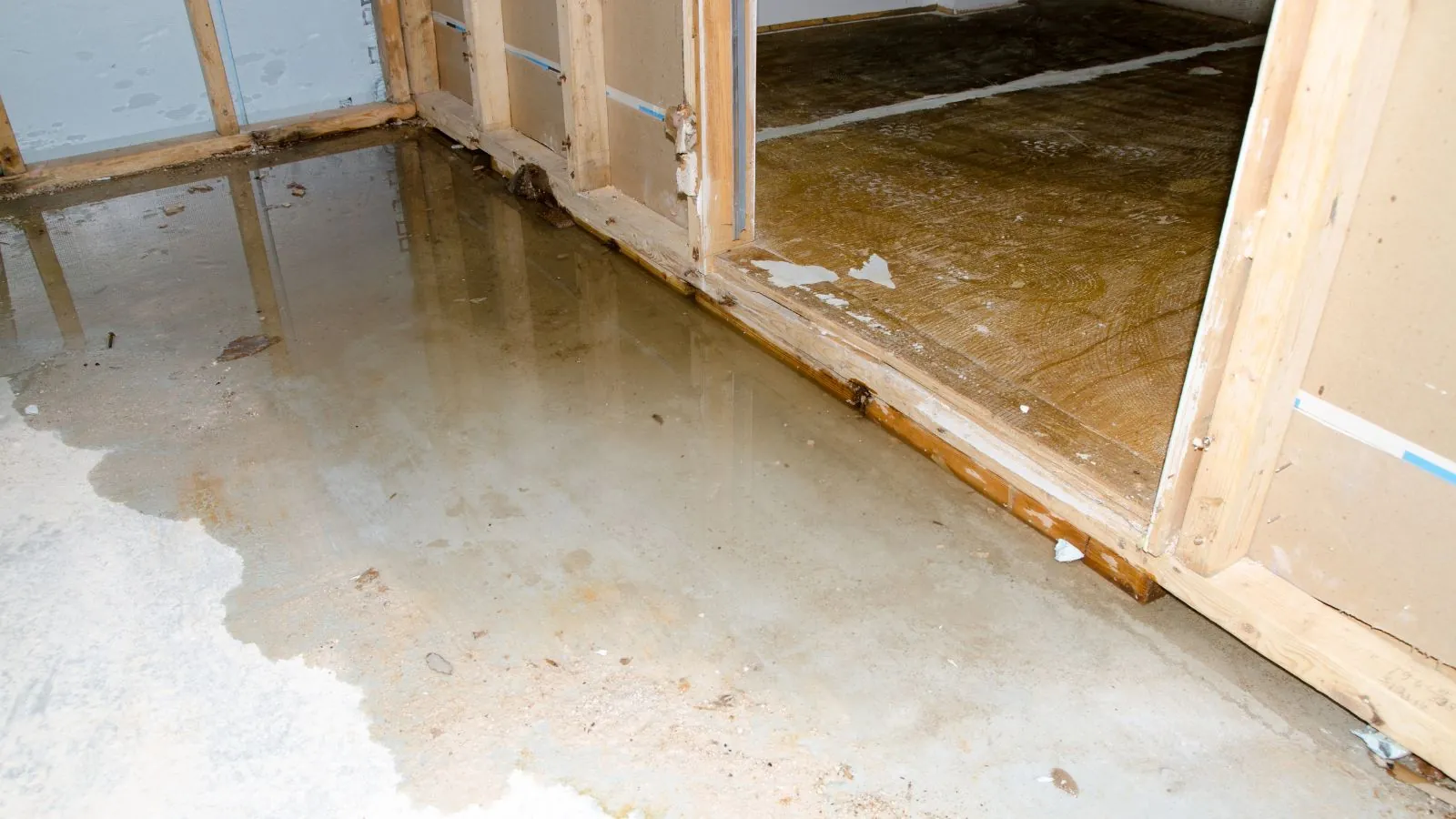
Basement water damage is standing or seeping water in a below-grade room, and the finished walls, flooring and stored contents it soaks. It usually starts from a sump failure, groundwater seepage, a sewer or drain backup or a leak from above, and each source needs a different response.
If water is in the basement, stay out when it reaches outlets, appliances or the panel, and call 911 or your utility for any electrical or gas concern. Our line is open 24/7, so call when it is safe. While you wait, move valuables upstairs, turn off the sump discharge only if you can reach it dry and photograph the water line.
When a wet basement is an emergency
It is an emergency when water is deeper than an inch or two, when it is still rising, when it reaches outlets or the furnace or when it came from a drain backup. Below-grade rooms trap water, so it does not drain away on its own the way it might from a garage.
It is also an emergency at night. A sump that fails at 3 a.m. can leave inches of water by morning. After-hours calls get the same response as daytime ones, and same-day response is offered when available.
Where basement water comes from
The source decides both the safety steps and who fixes the cause.
| Source | What you usually see | Who fixes the cause |
|---|---|---|
| Sump pump failure | Water rising from the sump pit, often after a power outage or heavy rain | Plumber or sump specialist |
| Groundwater seepage | Dampness or water along the wall base and floor joint | Drainage or foundation contractor |
| Sewer or drain backup | Dirty water from floor drains and fixtures | Plumber, with sewage cleanup first |
| Leak from above | Drips, stains and wet ceilings under a bathroom or kitchen | Plumber for the source line |
Restoration dries and cleans what the water reached. It does not stop water from coming back, and that is a different trade.
Stay clear of anything electrical and call the 24/7 line. We start with safety, then extraction.
What local flooding reports tell Bellmore homeowners
Local press reported about five inches of rain in six hours in Bellmore in 2014, and a basement on Mitchell Street flooded.
The practical point is that these events can overwhelm a sump or a drain quickly. If your basement floods in heavy rain, write down the date and what happened, because it helps both your insurer and the contractor who looks at the cause.
Finished basements, contents and what gets saved
Finished basements are the hardest to dry, because drywall, insulation, carpet and framing all absorb water. The first hours decide how much can be saved.
Drywall and insulation
Wet drywall often needs flood cuts, and soaked insulation usually has to come out.
Carpet and flooring
Carpet and pad are checked first. See carpet water damage for the decision steps.
Stored boxes and furniture
Cardboard and upholstered pieces absorb water quickly and are moved first.
Appliances and utilities
Furnaces, water heaters and electrical gear are left to the proper trades to inspect.
How we extract and dry a basement
Extraction units remove standing water first. Air movers and dehumidifiers then dry the room and the walls. For deep or large jobs, water extraction explains the pumps and wet vacuums, and structural drying covers moisture mapping.
We take readings on each visit and leave equipment in place until the numbers read normal. If sewage or floodwater is involved, sewage backup cleanup covers the safety steps first.
Safety before anything else
If your basement is flooded
- Do not enter if water is near outlets, the panel or the furnace.
- Call 911 or your utility for electrical hazards or a gas smell.
- Keep children and pets away from the water, especially if it came from a drain.
- Do not run a household vacuum on standing water.
- Photograph the water line and damaged items before they are moved.
After the water is out
Once standing water is gone, the room still holds moisture in the slab, the wall bases and anything stored on the floor. A basement that smells musty a week later usually dried too fast on top and stayed damp underneath.
We keep dehumidifiers running and take readings until the walls and floor read normal. If the water came from a drain or the ground, we also explain which items are cleaned and which are thrown away.
What affects the cost of basement water damage
We explain scope and price before work starts. These factors decide the number.
| Factor | How it changes the job |
|---|---|
| Water depth and category | Deeper or dirtier water means more removal and more safety steps |
| Finished or unfinished space | Finished rooms have more materials to dry or replace |
| Time before extraction | Hours of standing water soak walls and contents |
| Contents involved | Furniture, boxes and appliances may need moving and sorting |
| Repair scope | Drying is one cost, and rebuilding walls and floors is another |
Insurance often covers sudden and accidental water damage, and a typical homeowners policy does not cover flood damage, according to the New York Department of Financial Services. Water backup may be covered by endorsement. Check your policy or ask your insurer, and document the damage before cleanup. We record moisture readings and photos so you have them ready.
Basements across Bellmore and nearby towns
We serve ZIP 11710 and nearby areas including Freeport. If your basement is near a creek or low street, check your address on the FEMA flood map and ask your insurer about flood coverage. Permit rules for repairs vary, so ask the Town of Hempstead Building Department.
Frequently asked questions
Yes. The dispatch line answers 24 hours a day, every day. Same-day response is offered when available, and we cannot promise an exact arrival time.
No. Restoration dries, cleans and repairs after water gets in. Stopping repeat water is a drainage or foundation job for another trade, and we will tell you that honestly.
Not if water is near outlets, the panel or appliances. Stay out and call 911 or your utility for any electrical or gas concern.
A typical homeowners policy does not cover flood, and water backup may be covered by endorsement. Check your policy or ask your insurer.
It depends on the water depth, the materials and the equipment. We take readings on each visit and keep equipment in place until they are normal.
Stay clear of electrical hazards, move valuables upstairs and photograph the water line. Do not run a household vacuum on standing water.
Call the line any hour and describe what you see. We will explain the scope and price before work starts.