
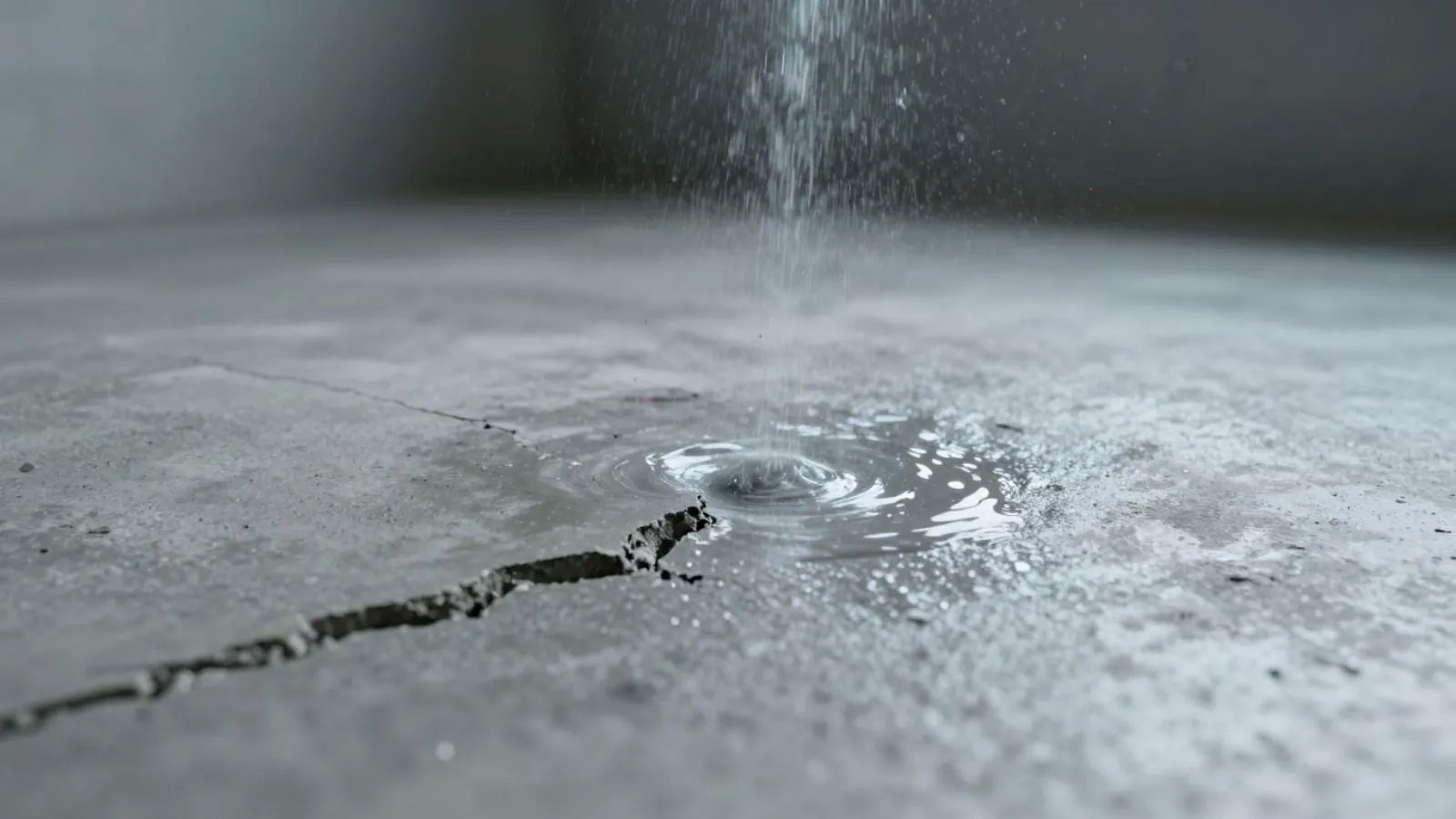
Slab leak water damage is the wet flooring, wall bases and contents that follow a water line failing beneath a concrete slab. This is an emergency because the pipe is under pressure and the water keeps coming until the main valve is closed. Our dispatch line answers 24/7.
While you wait, shut off the main water valve, stay out of wet rooms where outlets are close to the floor and turn off power to wet areas only if the panel is dry and reachable.
Water under a slab does not stay put. It finds the edge, a crack or a joint and rises into carpet, tile and the bottom of walls. Photograph what you can before anything is moved, and call right away if the water seems to be spreading.
Warm spots, a running meter and damp carpet: signs of a slab leak
Most people do not search for a slab leak. They search for a warm patch on the floor, a water bill that jumped, a meter that keeps turning with every faucet off, or the sound of running water when the house is quiet. Damp carpet along a wall with no obvious source, or a baseboard that stains from the bottom up, point the same way.
The trade name for this is a slab leak, a break in a pressurized line routed through or under the concrete floor. Finding and fixing that line is plumbing work. Drying the flooring, walls and contents the water reached is the restoration work we do.
When a slab leak is an emergency
Treat water coming up through a floor as an emergency whenever it keeps spreading or you cannot find a way to stop it. A leaking line under a slab keeps flowing at household pressure, and closing the main is the only thing that stops it.
If a hot water line is the source, the floor above it can feel warm and the water may be hot. Keep children and pets away from the area, and do not step in standing water near outlets or appliances. If you smell gas or the panel is wet, leave and call 911 or the utility first.
What happens to a house when water rises from below
A slab leak damages a house from the floor up, and the order matters for how we dry it.
| Material | What the water does | What usually follows |
|---|---|---|
| Carpet and pad | Water wicks upward from the slab into the pad | Pad is often removed, carpet may be lifted and dried |
| Tile and grout | Water pools in grout lines and under tiles | Moisture mapping checks for water trapped below |
| Wood and laminate | Boards absorb from the underside and cup | Panels are lifted when they cannot be dried flat |
| Wall bases | Water wicks up drywall and baseboard | Bottom drywall is often cut and dried or replaced |
| Stored items | Boxes at floor level soak through | Paper and cardboard rarely survive |
Close the main valve, then call. After hours or weekends, the line is the same and same-day response is offered when available.
What we do and what a plumber does
Be clear about the split. A plumber locates the leak with listening gear or other detection tools, then repairs or reroutes the line, which can involve cutting into the slab. That work is a plumbing trade, and we do not claim to do it.
We arrive to control the water damage. That means extraction of standing water, moisture mapping across the floor and the lower walls, removal of materials that cannot be saved and drying with air movers and LGR dehumidifiers until readings are normal. Our water extraction work often comes first, and drying follows the process described on the structural drying page.
Steps to take while the line is open
Before the crew arrives
- Shut off the main water valve and confirm the meter has stopped turning.
- Do not run faucets or flush toilets, since the line may still be partly pressurized.
- Cut power to wet rooms at the breaker only if the panel is dry and you can reach it without stepping in water.
- Lift small furniture and rugs off the floor, and keep electronics out of the room.
- Take photos and video of the floor, the wet walls and the meter reading for your insurer and the plumber.
What affects the cost of slab leak water damage
A slab leak job is priced on what the water reached, not on the pipe. We explain the scope and price before work starts.
| Factor | How it changes the job |
|---|---|
| Time the line ran | Longer run time means more rooms and more wet material |
| Flooring type | Tile, wood and carpet each need a different drying and removal plan |
| Area affected | Each additional room adds equipment and labor |
| Wall and contents impact | Wet wall bases and stored items add removal and disposal |
| Plumbing access | Slab repair may open the floor again and change the drying schedule |
Many policies treat sudden and accidental water damage differently from slow, long-term leakage, and wording on leaks under a slab varies a lot. Check your policy or ask your insurer, and do not delay reporting the loss. Dated photos and moisture readings help your file.
A slab leak in Bellmore homes
We cannot say how common slab leaks are in Bellmore, and we would rather say so than invent a number. What we can say is that the dispatch line covers ZIP 11710 and nearby areas like Freeport at every hour, and that the response does not change if the leak starts on a weekend.
Where homes are on a slab, the water source and the flooring type decide the plan, so you can expect questions about both when you call. Water that came up through a floor often reaches hardwood floors and carpet first, and each has its own drying limits.
Slab leak safety checks while you wait
Do this first
- Shut off the main water valve and watch the meter to see whether it keeps moving
- Do not walk on warm or soft spots on the floor near electrical outlets
- Turn off the water heater if hot water is the suspected source
- Keep furniture and valuables off wet flooring
- Photograph the damp areas and note when you first saw them
The standard behind the work
Restoration professionals point to ANSI/IICRC S500 as the published standard for water damage work, and you can ask any company whether its crews follow it.
Frequently asked questions
Yes. The dispatch line answers 24/7, including nights, weekends and holidays, and same-day response is offered when available. We cannot promise an exact arrival time, but we will tell you how to control the water while you wait.
Those two signs together are a common reason to suspect one, especially if no faucet is running. Shut off the main and see whether the meter stops, then call a plumber to confirm the leak and call us for the water damage.
No. Locating and repairing a line under concrete is a plumbing job. We handle extraction, drying, removal and restoration of the areas the water damaged.
Often yes, if it is dried quickly and the material allows it. Tile and sealed surfaces dry better than carpet pad and some wood products. Moisture readings decide.
Policies differ, and coverage often depends on whether the damage was sudden and accidental. Check your policy or ask your insurer about leaks beneath a foundation, and document everything before cleanup.
Not always. Leave if the panel is wet, you smell gas or the water is hot and spreading. Otherwise keep out of wet rooms and wait for guidance on the phone.
Call the line any hour and describe what you see. We will explain the scope and price before work starts.