
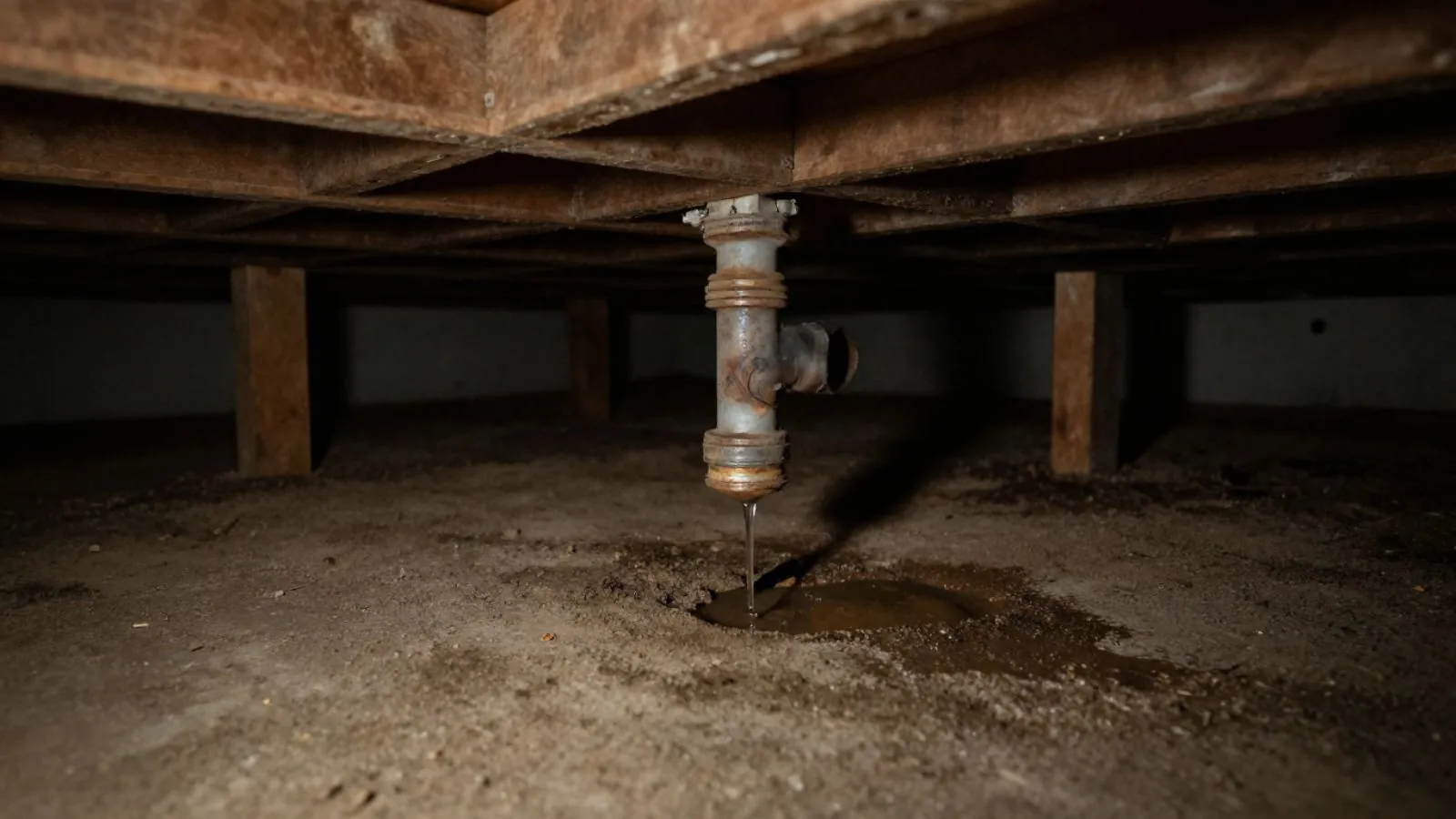
Crawl space water damage is the wet soil, insulation, joists and subfloor that result when water gets into the low void beneath a raised floor. It can come from a pipe, a storm, groundwater rising or a vapor problem that has been quietly building. The space is dark, tight and poorly ventilated, so drying it takes planning rather than speed alone.
If you have a crawl space, you may notice cold floors, a damp smell in the rooms above or bounce in the floorboards before you ever see water. A pipe leaking under the house is a good reason to shut off the main and then call. Stay out of a crawl space that has standing water near wiring, and never enter one alone.
What water does in an under-floor void
Floor joists, subfloor and insulation sit close to the ground, which means they are close to the water. Wood absorbs from the underside, swells and loses strength, and it dries slowly because air barely moves.
Moisture also rises as vapor from damp soil, wets insulation from below and condenses on cold ducts and pipes. A crawl space does not need a flood to cause trouble. A small leak or a few weeks of wet soil is enough to affect the floor above.
Four ways water gets into a crawl space
Plumbing leaks
A supply or drain line fails and water pools on the ground or runs down joists. A supply break is fastest and is covered in burst pipe water damage.
Storm and surface water
Heavy rain pushes water through vents, door openings and wall seams, especially when drainage slopes toward the house.
Rising groundwater
After heavy rain, the water table can lift and seep into the space from below.
Vapor and condensation
Damp soil and warm air meeting cold surfaces wet insulation and wood without any visible puddle.
Tell us what you see from the access hatch. We help you decide what is a leak, what is groundwater and what can wait.
Signs the space below is wet
The most reliable clue is a change in the rooms above. Floors feel colder, doors stick, boards cup or sag and a damp smell shows up near registers and vents. Pests and rust on exposed metal are other signs that moisture has been in the space for a while.
If you can see into the space from the access hatch, look for dark soil, hanging insulation, white staining on masonry and any visible water line on piers or walls. Photograph it from the opening and leave the entry for the crew.
How a crawl space is dried
The work is slower than a room, and it is built around access. We start by shutting off the source, then extract any standing water with pumps and extraction units. A moisture meter shows how wet the joists and subfloor are, and a thermal camera helps spot wet insulation without crawling everywhere.
Wet insulation is removed because it holds water against the wood above it. Then air movers and LGR dehumidifiers run until the readings are normal. For floors above a wet space, the process connects to structural drying, since the subfloor and the framing are what we are drying.
Crawl space or basement: which page fits your house
The two get mixed up because both are below the living space. The differences change how the job is done.
| Question | Crawl space | Basement |
|---|---|---|
| Can you stand up in it | Usually not, and access is tight | Yes, and often finished |
| What gets wet first | Soil, insulation and joists | Floor, walls, finishes and contents |
| How it is dried | Targeted removal and dehumidification | Extraction, then room drying |
| Where to read more | This page | Basement water damage cleanup |
After a big storm: why south of Merrick Road should check below the floor
South of Merrick Road, press reports from Hurricane Sandy in 2012 describe several feet of water in parts of South Bellmore, and the National Weather Service records Hurricane Irene water up to 4 feet deep in Bellmore in August 2011. We are not saying every home has a crawl space.
If yours does, a storm like that is a reason to open the access hatch within a day or two of the water leaving. Check your address on the FEMA flood map, and ask your insurer whether flood is covered, because a typical homeowners policy does not cover flood damage.
What affects the cost of crawl space water damage
Access and moisture history drive price more than square footage. We explain scope and price before work starts.
| Factor | How it changes the job |
|---|---|
| Depth of water and source | Standing water needs extraction, while vapor problems need a different plan |
| Access and clearance | Tight spaces slow every step and may limit equipment size |
| Insulation and materials | Wet insulation is removed, and wood may need drying or evaluation |
| Days of drying | Poor airflow stretches the drying schedule |
| Repair scope | Replacing insulation or floor sections is a separate decision from drying |
Insurance often responds to sudden and accidental damage like a pipe break below the floor, and it often does not cover slow seepage or long-term vapor problems. Flood is usually a separate policy. Check your policy or ask your insurer, and photograph the space before any cleanup.
Crawl space damage in Bellmore and nearby
The line covers Bellmore ZIP 11710 and nearby towns like Freeport around the clock. Same-day response is offered when available, and we will explain what we see from your photos before a crew goes under the house.
Frequently asked questions
Check the access hatch with a flashlight from the opening. Cold floors, a damp smell upstairs and sagging boards are other clues. Do not enter a space with standing water near wiring.
Yes, within safe limits. Access, clearance and electrical risk decide the plan, and we will tell you if the job needs special equipment or a different approach.
No, but moisture is what mold needs, so we measure and dry quickly. If growth is visible after drying, mold remediation may be a separate step following ANSI/IICRC S520.
No. A crawl space has limited access and a dirt or thin concrete floor, and the plan is built around removing wet insulation and drying joists. A basement is dried as a room.
Sudden and accidental causes like a pipe break are often covered. Slow seepage and flood often are not, and flood needs a separate policy. Check your policy or ask your insurer.
We dry and restore. Fixing grading, gutters or foundation drainage is a different trade, and we will say so honestly when drainage is the real cause.
Call the line any hour and describe what you see. We will explain the scope and price before work starts.