
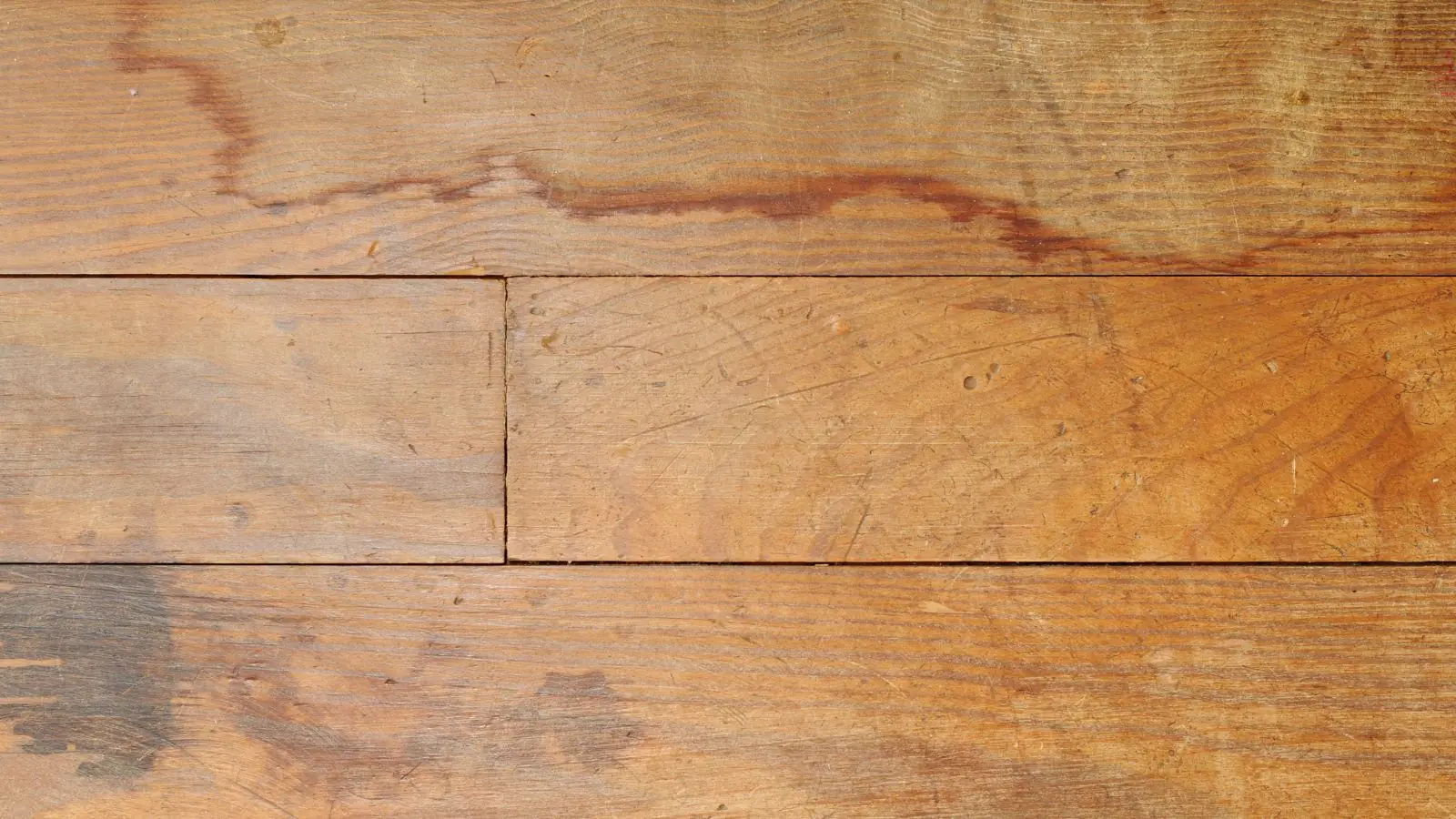
Hardwood floor water damage is the swelling, cupping, crowning or staining of wood and laminate flooring after it absorbs moisture. Wood is a sponge that expands across the grain, and it releases water slowly, so a floor that looks fine after a leak can start to cup a day or two later.
If a floor is wet right now, stop the source, lift rugs and furniture legs off the wood and call the 24/7 dispatch line. Do not sand or refinish anything until the wood and the subfloor read dry, because sealing in moisture makes the problem worse.
Cupping, crowning and buckling: what each one means
The shape of the damage tells a story about where the water was. Cupping means the edges are higher than the center, which usually points to moisture from below. Crowning is the reverse, with a raised center, and often follows a cupped floor that was sanded before it dried.
Buckling is the serious one, when boards lift off the subfloor. That usually means a large amount of water or a long exposure, and the floor often has to be removed in sections.
Cupping after a leak: the call we hear most
The typical story is a washer valve, a dishwasher line or a pipe in the ceiling below a bathroom that leaked quietly. Days later the boards near the spot start to lift. By then the water has long since stopped and the floor is still wet underneath.
The fix starts with finding the moisture, not the boards. We scan the floor surface and probe the subfloor, because a floor can read dry on top while the plywood underneath is still saturated.
Save, sand or replace
The decision follows the readings and the age of the wetting.
| What the floor shows | Likely path | Why |
|---|---|---|
| Mild cupping after a clean water leak | Dry in place, then reassess | Many floors flatten as moisture comes down |
| Cupping that stays after drying | Sand and refinish | The boards are sound but the profile has to be flattened |
| Buckling or separated boards | Remove and replace sections | Boards that left the subfloor rarely settle back |
| Black staining or soft wood | Replace affected boards | Rot and lasting stain do not reverse |
| Water from a tidal surge or sewage | Remove affected flooring | Contaminated water needs different handling |
Call any hour. We measure the boards and the subfloor before recommending a repair.
Why drying a wood floor takes patience
Drying too fast cracks boards, and drying too slowly invites mold. Crews use controlled airflow, low-humidity air and sometimes floor drying mats that pull moisture through the boards from the surface.
Readings are taken at each visit. We compare wood moisture to a dry reference from the same floor, because the right number differs between homes and species. When the numbers stabilize, we tell you whether sanding, replacement or nothing is the right next step.
Laminate and engineered flooring
Laminate has a fiberboard core that swells at the seams and does not recover, so water that sits for more than a short time usually means replacement. Engineered wood has a plywood core and tolerates a little more, but edges still lift.
If the wet area is large, the carpet page covers the pad and carpet questions in the adjoining rooms, and structural drying explains the equipment used under floors.
First steps on a wet wood floor
Before the crew arrives
- Stop the water source and wipe standing water with towels.
- Lift rugs and furniture legs, and put foil or plastic under heavy pieces.
- Keep the heat on and run air conditioning if it is warm, but do not point a fan across the floor alone.
- Do not use heat guns or irons to dry boards.
- Photograph the floor from several angles before anything is moved.
Subfloor and crawl space questions
Many floors sit over plywood on joists, and some sit over a crawl space or a slab. Moisture from below shows up as cupping, so we check what is under the floor as well as the floor itself.
If a crawl space is damp, drying the boards alone will not hold. The source has to be found, and the readings will show whether the floor keeps taking on moisture after the first round of drying.
What affects the cost of hardwood floor water damage
We explain scope and price before work starts. The factors below decide it.
| Factor | How it changes the job |
|---|---|
| Wood type and finish | Solid, engineered and laminate react differently and have different repair paths |
| Time the floor stayed wet | Longer wetting means deeper swelling and a lower chance of saving the floor |
| Subfloor condition | Wet plywood has to dry too, and sometimes has to be replaced |
| Area involved | More square footage means more equipment and drying time |
| Refinishing scope | Sanding and refinishing a floor is a separate repair step |
Insurance often covers sudden and accidental water damage to floors, and long slow leaks are often treated differently. Flood damage usually needs separate flood coverage. Check your policy or ask your insurer, and ask what documentation they want. We record moisture readings and photos so you have them ready.
Floors in Bellmore after storms and leaks
Hurricane Sandy in 2012 sent tidal water into South Bellmore, according to local press. If your floor was wet from that kind of source, boards usually come out, because the water is contaminated and the wood stays wet. If it came from a leak or burst line, ask about burst pipe cleanup first, because a wet floor is often a symptom.
We serve ZIP 11710 and nearby areas including Freeport. Permit rules for any structural repair vary, so ask the Town of Hempstead Building Department.
Frequently asked questions
Wood absorbs moisture from below and expands across the grain, so the board edges rise. Cupping can appear a day or more after the water stops.
Often, if the cause is dried first and the boards are not buckled or rotted. A moisture reading tells us whether the floor can flatten as it dries.
No. Sanding before the wood and subfloor are dry can lock in a crowned profile or trap moisture. Wait for stable dry readings.
Rarely. The fiberboard core swells at the seams and does not shrink back, so replacement is common after more than brief exposure.
Sudden and accidental damage is often covered, slow leaks often are not, and flood usually needs a separate policy. Check your policy or ask your insurer.
Yes. The line answers 24 hours a day, and same-day response is offered when available.
Call the line any hour and describe what you see. We will explain the scope and price before work starts.