
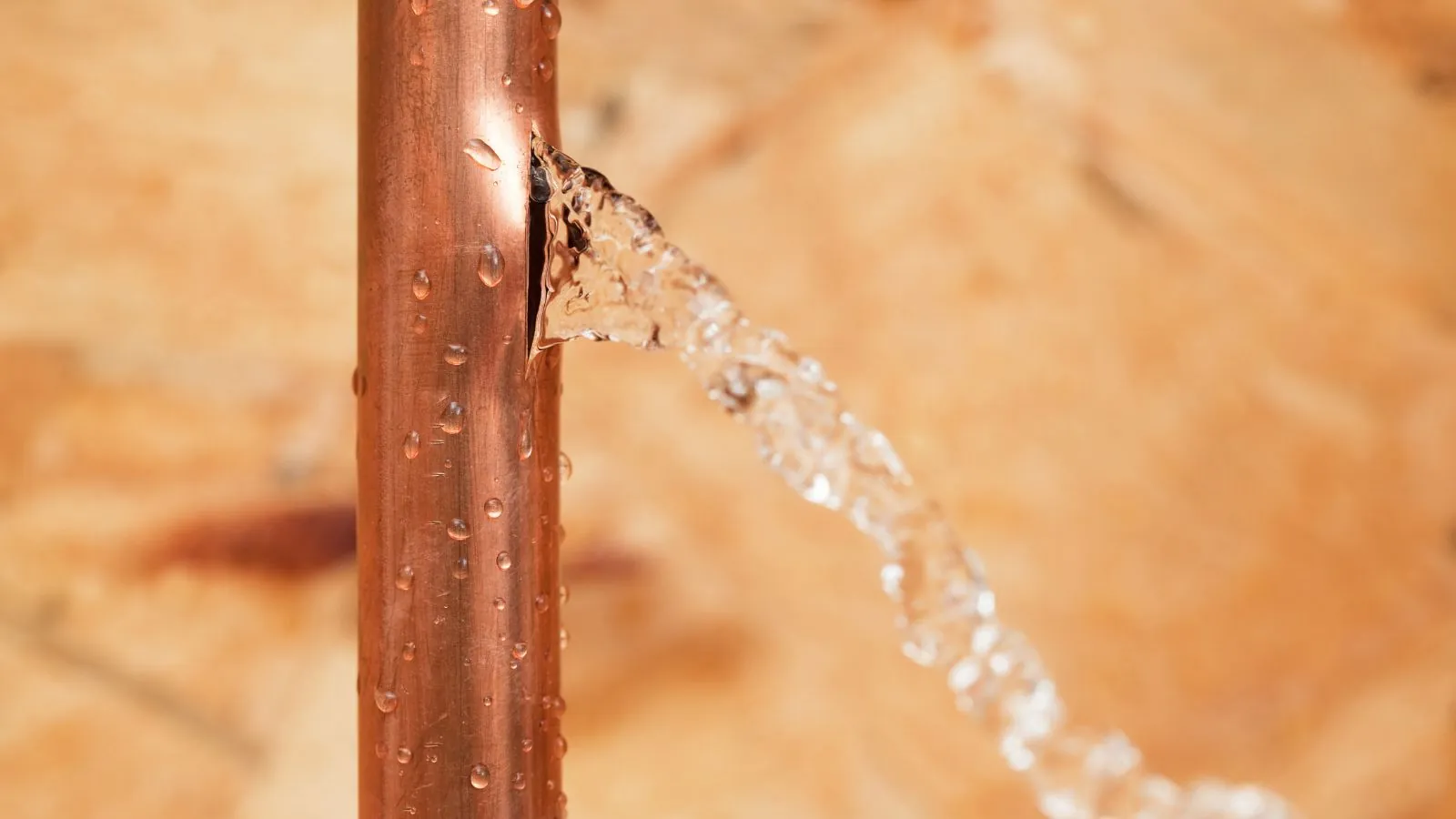
Burst pipe water damage is the wet structure, flooring and contents left behind when a pressurized supply line splits, a joint fails or a fitting lets go. Pressurized means the water keeps coming until someone closes a valve, which is why a burst pipe in Bellmore turns into a restoration job faster than almost any other leak.
If water is flowing right now, close your main shutoff valve first, then call us at our 24/7 dispatch line. Stay out of any room where water has reached outlets, switches or the electrical panel. If the panel is wet or you smell gas, leave and call 911 or your utility before you call anyone else.
When a burst pipe is an emergency
Almost every burst pipe is an emergency, because supply lines run at household pressure all day. A pinhole spray behind a wall can soak insulation and drywall for hours before a stain shows up, and a fully split pipe can flood a room in minutes.
The clock that matters is the one on the building materials. Drywall, carpet pad and subfloor start holding moisture within the first hour, and the longer they stay wet the more of them end up in a dumpster instead of a dryer.
What to do in the first ten minutes
While you wait for the crew
- Shut off the main water valve. In many Bellmore homes it sits where the line enters the house, near the meter or the water heater. Your water bill names your supplier if you need help finding it.
- If the pipe is above the main panel or near outlets, turn off power to that area only if you can reach the breaker without stepping in water.
- Open the lowest faucet in the house to drain the line and take pressure off the break.
- Move rugs, electronics and paper off the floor, and lift furniture legs onto foil or plastic blocks.
- Photograph the break, the water line on walls and every damaged item before anything is moved. Your insurer will ask for this.
Close the main valve, then call the 24/7 line. We start with the source, then extraction, then drying.
How we handle a burst pipe, in order
The order matters, and skipping a step is how a small loss becomes a large one. We confirm the water is off, then find where it went. Water from a split pipe rarely stays where the pipe is. It follows framing down into the wall cavity, along the ceiling below and under flooring that looks dry on top.
A moisture meter and a thermal camera show that hidden path without opening every wall. Extraction units pull standing water, and air movers and LGR dehumidifiers then dry what is left. Wet material that cannot dry in place, such as saturated insulation or carpet pad, comes out.
Where water goes after a pipe splits
| Location of the break | Where the water travels | What usually needs checking |
|---|---|---|
| Inside an exterior wall | Down the wall cavity to the bottom plate and subfloor | Insulation, drywall, baseboard and the floor along that wall |
| In a ceiling or upper floor | Through the ceiling below, then into the wall edges | Ceiling drywall, light fixtures and any rooms under the break |
| Under a sink or at a vanity | Into the cabinet base, then across the floor | Cabinet floor, flooring seams and the wall behind the cabinet |
| In a basement or utility room | Across the slab and into stored boxes and finished walls | Wall bottoms, carpet and anything stored at floor level |
Burst pipes, local housing and what we see on Merrick Road side streets
Bellmore is a hamlet of mostly single-family homes in Nassau County, with a shopping and dining strip along Merrick Road and the rail line at the Bellmore station. Houses of different ages mix on the same block, so supply lines run from older copper and galvanized to newer plastic, and each fails in its own way.
That mix is why we ask about the pipe material when you call. A split in rigid copper, a failed plastic fitting and a corroded galvanized joint all release water differently, and the answer changes how fast we need to move. ZIP 11710 gets the same 24/7 line as every other address we serve.
What affects the cost of a burst pipe cleanup
Every loss is different, so we explain scope and price before work starts. These are the factors that move the number most.
| Factor | How it changes the job |
|---|---|
| How long water ran | Longer run time means more saturated materials and more drying days |
| Water category | Clean supply water is Category 1. Water that has sat or crossed dirty surfaces can be Category 2 |
| Area affected | More rooms and more floor levels mean more equipment and more labor |
| Materials involved | Hardwood, carpet pad and plaster dry differently than drywall and tile |
| Repair scope | Drying is one cost. Replacing drywall, floors or cabinets is a separate rebuild decision |
Insurance often responds to sudden and accidental water damage like a burst pipe, and it often does not cover damage from a slow leak left unrepaired. Check your policy or ask your insurer, and ask what documentation they want. We note moisture readings and photos so you have them ready.
After the water is out: drying and repair
Drying is a measured process, not a guess. We record moisture readings on day one and on each return visit, and equipment stays until the readings come down to normal for that material. Pulling equipment early is the most common reason mold shows up weeks later.
Once materials are dry, the repair path is yours to choose. Some homeowners ask for drywall and baseboard repair from the same dispatch. Others only need drying, and a separate contractor handles the rebuild. If the break was above a finished room, the ceiling below is usually the next thing to check.
When a pipe fails in a cold snap, a frozen section is usually the cause, and frozen pipe water damage has its own steps for thawing and finding the split. For standards, ANSI/IICRC S500 is the published guide for water damage restoration, and you can ask any company whether its crews work to it.
Frequently asked questions
Yes. The dispatch line answers 24 hours a day, every day, including nights, weekends and holidays. Same-day response is offered when available, and we cannot promise an exact arrival time, but we will tell you what to do while you wait.
Most often it is where the water line enters the house, near the meter, the water heater or a basement wall. Your water bill names your supplier, who can help if you cannot find it.
Only if the breaker panel is dry and you can reach it without standing in water. If water is near outlets or the panel, stay out and call 911 or your utility first.
Coverage depends on your policy. Sudden and accidental water damage is often covered, and damage from a leak left unrepaired often is not. Check your policy or ask your insurer, and document the damage before cleanup.
It depends on what got wet. Drywall and carpet often take a few days, while framing, plaster and wood floors can take longer. We measure moisture on each visit and keep equipment in place until the readings are normal.
Ask when you call. Some jobs include repair coordination and some are drying only. Either way we explain scope and price before work starts.
Call the line any hour and describe what you see. We will explain the scope and price before work starts.