
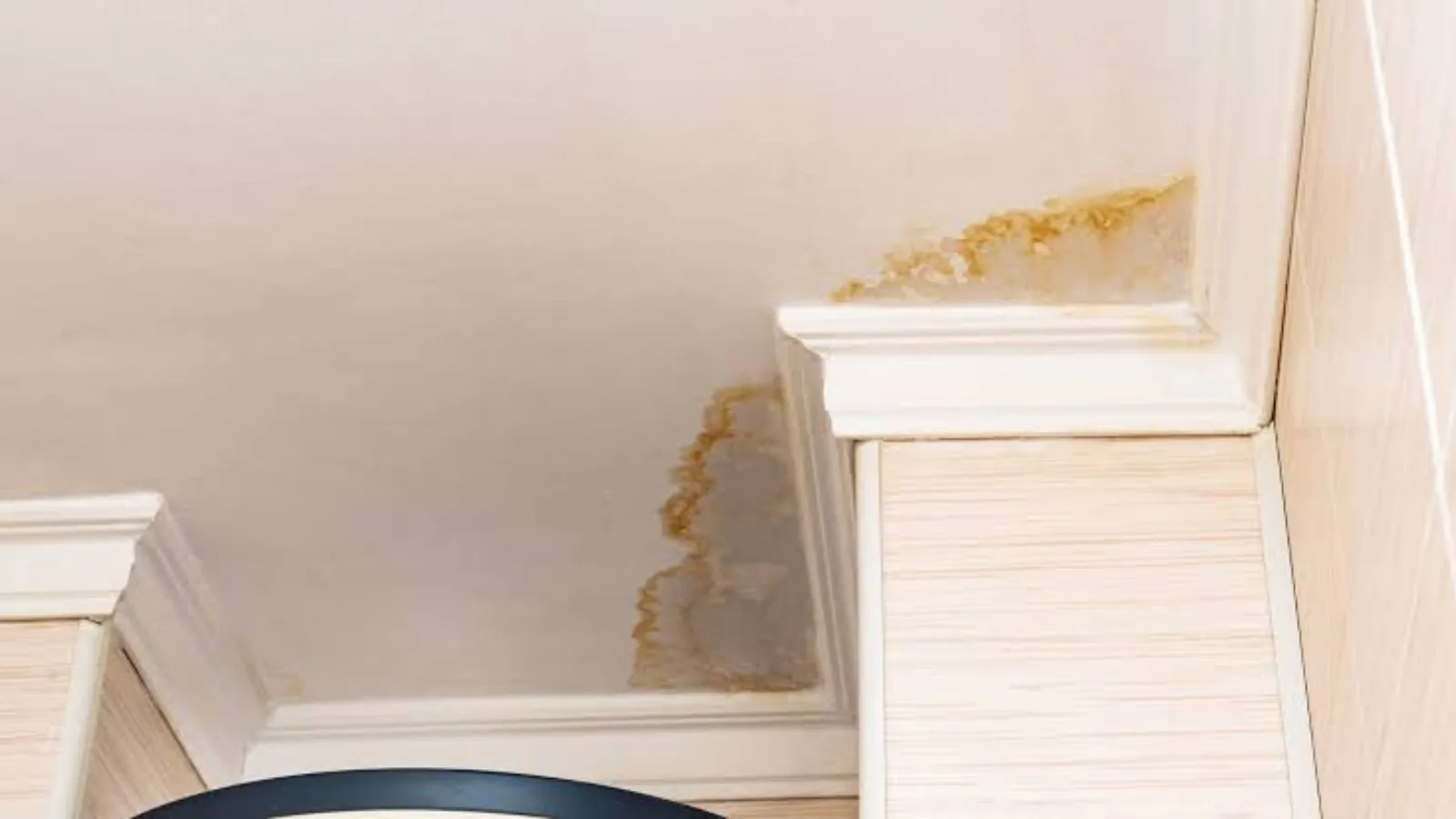
Wall and drywall water damage is moisture in the paper-faced gypsum board, baseboards, insulation and framing of an interior or exterior wall. Drywall wicks water upward and outward, so the stain you see is often smaller than the wet area behind it.
If a wall is wet now, stop the source, move furniture away and call the 24/7 dispatch line. Do not press on a bulging wall, and keep outlets in wet walls switched off until the area is checked.
Reading a wet wall
A wall shows damage in stages. Paint blisters and bubbles first, then a brown ring forms, baseboards swell and drywall softens. By the time drywall crumbles, moisture has usually been present for days.
A moisture meter and a thermal camera show the wet area without cutting. That keeps repairs small, because we open only the sections that read wet.
What the signs mean
The same wall can tell you several things, and each one points to a different next step.
| What you see | What it often means | Next step |
|---|---|---|
| Paint bubbles or blisters | Moisture behind the paint or inside the drywall | Meter the wall and find the source |
| Brown ring or stain | Water has moved through the drywall and dried at the edge | Check the room above for a leak |
| Swollen baseboard | Water at floor level, from a leak or surface water | Pull the baseboard and check the wall base |
| Soft or crumbling drywall | Long exposure or a large amount of water | Cut out and replace affected sections |
| Musty smell | Damp materials that have not dried | Dry the cavity, then check for mold |
Call any hour. We map the moisture before cutting into anything.
Flood cuts: when and how high
A flood cut removes drywall at a set height above the wettest point so the cavity can dry. Contractors usually cut a bit higher than the visible line, because water wicks upward through the board.
We cut when insulation is soaked, when the water was contaminated or when readings stay high after drying. A neat cut along a stud line makes repair easier, and a taped horizontal edge keeps the patch small.
Baseboards, insulation and paint
Baseboards are the first thing to swell, and they are often removed so the wall base can dry. Insulation is the sponge inside the wall. Wet fiberglass can sometimes dry in place, but wet cellulose or foam usually has to come out.
Paint is the last step. Sealing or painting a wall before it is dry traps moisture, so we recommend waiting for stable readings. If the wet area is on a ceiling, ceiling water damage repair is the page that applies.
How a wall gets dried
The process is simple to describe and strict in practice.
- 1
Find the source
Stop the leak or the storm entry before any drying starts.
- 2
Open as little as needed
Small cuts or removed baseboards let air reach the cavity.
- 3
Dry the cavity
Air movers and dehumidifiers run, and readings are logged.
- 4
Repair and finish
Drywall, tape, texture and paint go back after readings are normal.
Outlets, switches and wiring in a wet wall
Wet walls often contain outlets and switches. Keep those circuits off until the wall is checked, and have a licensed electrician inspect anything that got wet before it is used again.
We dry the cavity around the wiring and leave the electrical work to the right trade. Permit rules vary, so ask the Town of Hempstead Building Department when wiring is part of the repair.
Exterior walls and siding
An exterior wall can be wet from outside even when the inside looks fine. Failed caulk, loose siding and window flashing let rain in behind the finish, and the water sits against the sheathing.
When that is the cause, repairing the drywall alone will not last. The entry point has to be sealed, and the cavity dried first.
What affects the cost of wall and drywall repair
We explain scope and price before work starts. These factors decide the number.
| Factor | How it changes the job |
|---|---|
| Wall area wet | More wall means more drying and more drywall to replace |
| Insulation type | Wet fiberglass can sometimes dry, and wet cellulose usually cannot |
| Water source | Clean supply water allows more saving than contaminated water |
| Time before drying | Days of dampness lead to softer drywall and a higher chance of replacement |
| Finish work | Texture and paint matching is a separate repair step |
Insurance often covers sudden and accidental wall damage, and gradual seepage is often treated differently. Flood damage usually needs separate flood coverage. Check your policy or ask your insurer, and ask what documentation they want. We record moisture readings and photos so you have them ready.
Walls after storms and plumbing leaks
Wind-driven rain can leave a wall wet from the outside in. Storm water damage explains how entry points are traced. If water came from a supply line, structural drying covers the equipment used inside the cavity.
We serve ZIP 11710 and nearby areas including Freeport. Permit rules for structural or electrical repairs vary, so ask the Town of Hempstead Building Department.
Wet wall safety checks before anyone cuts or sands
Do this first
- Stay away from outlets and switches on a wet wall and turn off that circuit only from a dry panel
- Do not press on a bulging ceiling or wall, because trapped water can release suddenly
- Open windows and run a fan if the room is not otherwise affected
- Keep dust down and do not sand or scrape older painted surfaces before asking a professional
- Photograph the wall, the stain edge and the source
The standard behind the work
The published reference for water damage restoration is ANSI/IICRC S500, and for mold work it is ANSI/IICRC S520. Ask any company you call whether its crews work to them.
Frequently asked questions
Look for bubbling paint, a soft spot, a stain or a musty smell. A moisture meter gives a clear answer without cutting the wall open.
Sometimes. Drywall that stayed wet briefly can dry in place, while crumbling or long-soaked board usually has to be replaced.
It is a horizontal cut through drywall above the wet line so the wall cavity can dry. It is repaired with new board and finish.
Not until the wall is dry and the source is fixed. Painting over moisture traps it and can cause peeling again.
Sudden and accidental damage is often covered, gradual leaks often are not, and flood usually needs a separate policy. Check your policy or ask your insurer.
Yes. The dispatch line answers 24 hours a day, and same-day response is offered when available.
Call the line any hour and describe what you see. We will explain the scope and price before work starts.