
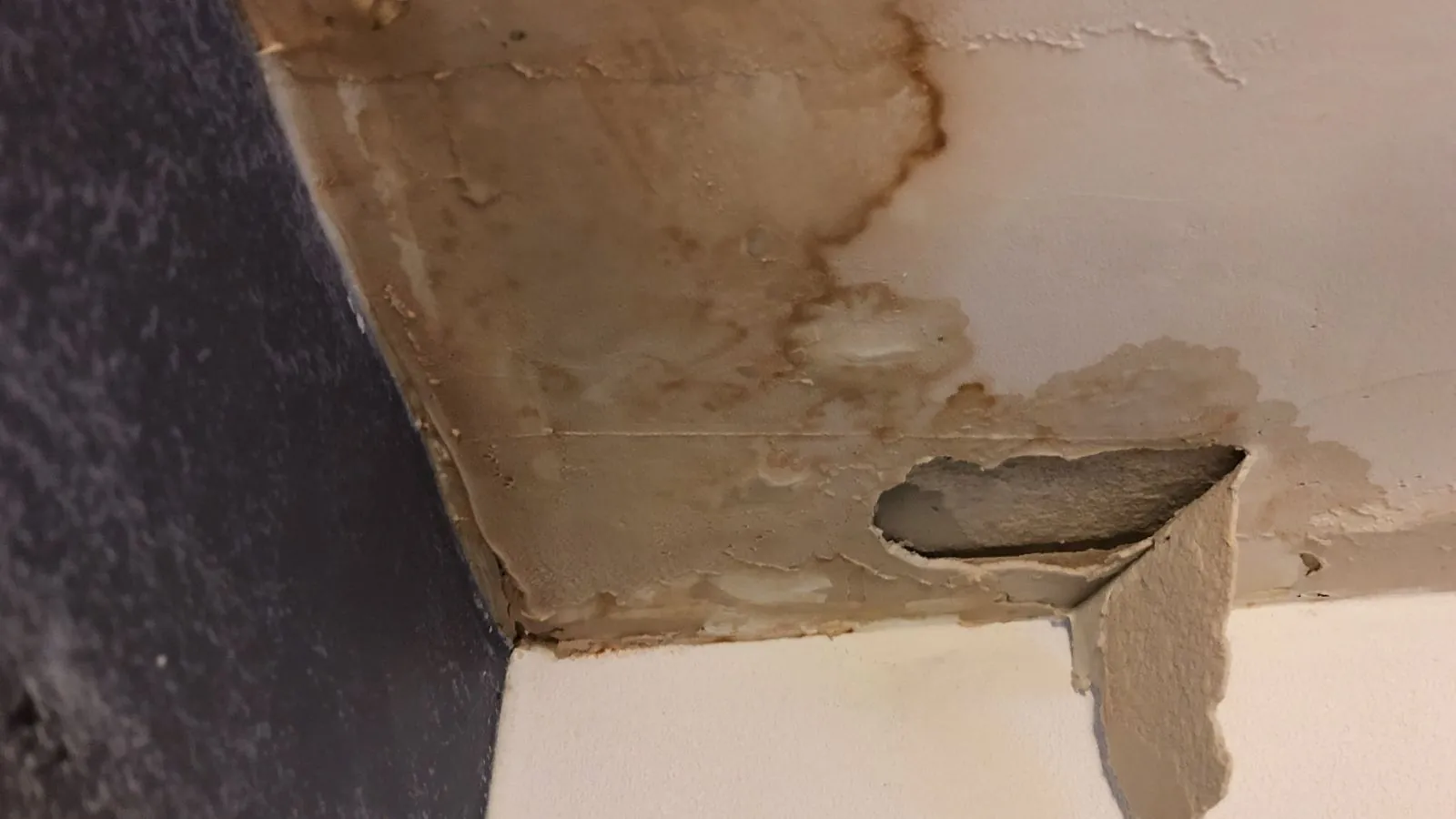
Ceiling water damage repair is the work of finding where water is coming from, drying the cavity above and below the ceiling, and repairing or replacing the drywall or plaster that was damaged. If a ceiling in your Bellmore home is dripping, bulging or sagging, move people out from under it, shut off the water if a pipe is the source and call our 24/7 line.
A ceiling can hold a surprising weight of water. Do not stand under a bulge, do not poke it unless a crew has told you to, and keep power off to any light fixture the water is touching, but only if the panel is dry and reachable. Call 911 or your utility first for any electrical risk. Then reach dispatch for same-day response when available.
What a stained ceiling is telling you
| Sign | Likely meaning | How urgent |
|---|---|---|
| Brown ring that grows | Water has reached the ceiling more than once or is still arriving | Urgent, because the source is still active |
| Bulge or sag | Water is pooled above the drywall or plaster | Emergency, because the section can fail suddenly |
| Drip from a fixture | Water is running through the cavity to the lowest opening | Emergency, and keep the fixture off |
| Pale stain with a dry feel | Past leak that has dried, or condensation | Inspect soon, and confirm with a moisture meter |
When a wet ceiling is an emergency
A sagging or bulging ceiling is an emergency because it can collapse without warning. Drywall that is soaked loses strength, and insulation above it can add weight. Clear the room, keep children and pets out and call the line.
We do not recommend relieving a bulge yourself unless a crew has told you how. Opening a controlled drain point in the right spot with a bucket below is done on site by trained crews, after the area is checked for wiring and the source is found.
Finding the source above the ceiling
Ceiling water has a limited list of sources, and each one calls for a different fix. An upstairs bathroom supply line or drain, a leaking pipe in the joist space, an HVAC line in the attic and the roof above all show up as the same brown stain below.
A moisture meter and thermal camera trace the wet path across the ceiling and into the framing. If the source is a pipe, the water is shut off and burst pipe water damage steps apply. If the source is the air handler, see AC leak water damage. If it is the roof, the next section applies.
Move out from under it and call. After-hours leaks are routine on this line.
Roof leaks: roof water damage and what comes through the ceiling
Roof water damage often starts small and shows up late. Water enters at a failed shingle, flashing, vent or valley, runs along the decking and rafters and soaks the insulation, and the ceiling stain appears feet from the actual entry point.
Roof leak water damage is common after wind-driven rain, and in Bellmore reports from 2014 described about five inches of rain in six hours. A single storm like that tests every roof in the area, so check ceilings after heavy rain, not only when you see a stain.
Water damage from a leaking roof needs two fixes in the right order. The roof has to be sealed by a roofer first, and we dry the insulation, framing and ceiling below. A temporary tarp over the opening can stop more water while the repair is scheduled.
When a ceiling has collapsed
A collapsed ceiling is a messy, hazardous scene. Wet drywall, insulation and sometimes fixture parts land on the floor, and the open cavity can keep dripping. Stay out of the room until the water is controlled, and do not touch exposed wiring.
The crew removes the debris, extracts the water, opens the cavity enough to dry the framing, and then the ceiling is rebuilt. Insulation that got soaked is usually removed. Any floor under the collapse is treated as a water loss too, and hardwood floor water damage repair covers what to expect if wood flooring was hit.
Repair or replace: how the decision is made
| Condition | Usual decision | Why |
|---|---|---|
| Small stain, dry drywall | Prime and repaint after the source is fixed | The material is intact and stable |
| Soft or crumbling drywall | Cut out and replace the section | Wet drywall loses strength and can grow mold |
| Sagging or bulged area | Remove and replace | It will not hold shape once dry |
| Plaster ceiling that is wet | Dry first, then decide case by case | Plaster dries slowly and may be saved |
What affects the cost of ceiling water damage repair
We explain scope and price before work starts. These are the factors that decide it.
| Factor | How it changes the job |
|---|---|
| Source of the water | A roof leak needs a roofer first, while a pipe leak needs the pipe fixed |
| Size of the damaged area | More area means more drywall and more drying equipment |
| Insulation and framing | Wet insulation adds removal and disposal, and framing needs drying |
| Access to the cavity | Attic access, stairs and fixtures add labor |
| Finish work | Texture, paint and trim match are a separate repair scope |
Insurance often responds to sudden and accidental ceiling damage, and often does not cover damage from a slow leak left alone. Check your policy or ask your insurer, and photograph the ceiling before anything is removed. We handle the drying and repair side, and the nearby wall edge is covered at wall and drywall water damage repair.
Serving Bellmore and nearby towns
We answer ceiling leak calls from ZIP 11710 and the nearby towns we serve, including Freeport. Evening and weekend leaks are routine on this line, and same-day response is offered when available.
Frequently asked questions
Yes. The line is answered 24 hours a day, every day, including nights and weekends. Same-day response is offered when available, and we cannot promise an exact arrival time.
No. A bulging or sagging ceiling can collapse suddenly. Move people and pets out, keep the area clear and call the line.
Only after the source is fixed and the area is dry. Paint over wet drywall traps moisture, and the stain usually bleeds through again.
We trace the wet path with a moisture meter and thermal camera from the ceiling up into the framing. A roofer then finds and seals the roof entry point.
Sudden and accidental leaks are often covered, and slow leaks left alone often are not. Check your policy or ask your insurer, and document the damage first.
Often yes if it is soaked, because it holds water and dries slowly. We explain what comes out and why before work starts.
Call the line any hour and describe what you see. We will explain the scope and price before work starts.