
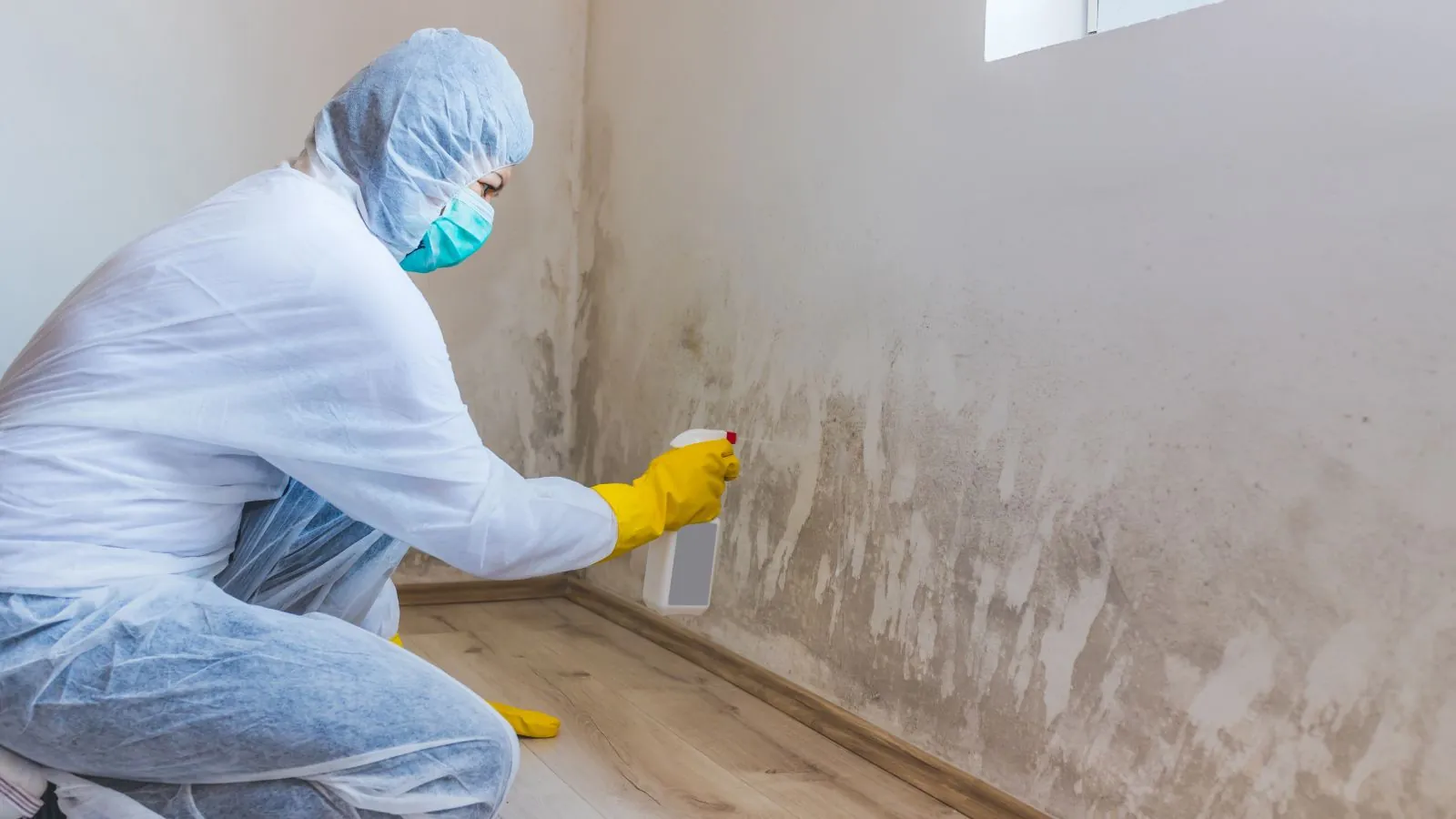
Mold remediation is the containment and removal of mold growth and the damp materials that support it, followed by drying and cleaning. In Bellmore, NY it usually follows a leak, a storm or a damp area that stayed wet longer than it should have.
If you suspect mold, stop the water source first, keep the area closed off and call the dispatch line. Do not scrub or spray bleach on a large area, because disturbing growth spreads it, and the damp material underneath is still there.
Musty smell, dark spots or a damp wall after a leak
Most people do not search for mold remediation first. They search for a musty smell in a closet, dark spots on a ceiling or a wall that stays damp after a plumbing repair. Those signs usually mean moisture has stayed in a material, and the trade name for fixing it is mold remediation.
The work is mostly about moisture. Remediation contains the affected area, removes materials that cannot be cleaned and dries the structure so growth stops being supported.
Why the water source comes first
Mold grows where materials stay damp, and cleaning mold off a wall that is still wet only buys a short delay. A leaking pipe, a failed roof section or an AC drain line has to be fixed before remediation can hold.
Call-in stories tell the same pattern. A toilet leak upstairs soaks the ceiling of a finished basement. A clogged AC condensate line drips into an attic or closet. A roof or siding leak soaks wall cavities for months. In each, mold followed the moisture.
Where mold shows up after leaks
These are the situations we see most, and each has a different source to fix.
Basement ceiling below a bathroom
A toilet or tub leak upstairs wets the ceiling below. See basement water damage for the water side.
AC drain line overflow
A clogged condensate line drips into the wall or ceiling. AC leak water damage covers the source.
Roof leaks and attic insulation
Slow roof leaks soak decking and insulation. Ceiling water damage repair covers the leak.
Siding and window leaks
Water behind siding keeps the wall cavity damp for months.
Call any hour. We explain scope and price before work starts, and we start with the water source.
What remediation involves
The steps follow the scope that is agreed before work starts.
| Step | What happens | Why it matters |
|---|---|---|
| Moisture check | Meters and thermal imaging find the wet area | Mold follows moisture, so scope starts here |
| Containment | Plastic barriers and negative air limit spread | Keeps spores from moving into clean rooms |
| Removal | Affected drywall, insulation or trim comes out | Porous materials cannot be cleaned inside |
| Cleaning and drying | Surfaces are cleaned and the structure is dried | Dry materials do not support growth |
| Verification | Readings and, when chosen, clearance testing | Confirms the work met the plan |
Inspection, testing and independent clearance
Callers often ask whether they need testing. Testing is a separate question from removal. An inspection finds where moisture and growth are. Independent clearance testing is done by someone who did not do the remediation and who checks the area after cleanup against the plan.
Ask whether your insurer, buyer or lender wants a test and what they expect. We explain the options before work starts, and we do not promise any particular result.
Mold clearance for a home sale or loan
Sometimes a buyer, lender or inspector asks for mold to be dealt with before a sale or loan moves forward. A written scope, photos, moisture readings and independent clearance results are the documents that usually help.
We cannot promise that a lender or buyer will accept any report. What we can do is document the work clearly so you can hand it to them. Ask the other party what they need before work begins.
ANSI/IICRC S520 and what to ask a company
ANSI/IICRC S520 is the published industry standard for mold remediation. It covers containment, removal, cleaning and verification. We follow it as a reference, and you can ask any company you call whether its crews work to it.
Ask about licensing too. Rules vary, so ask whether your state licenses mold work. Questions about health and symptoms belong with a physician, and the remediation team cannot answer them.
What to do and not do before the crew arrives
If you suspect mold
- Stop the water source first, and keep the area closed off if you can.
- Do not scrub, sand or spray a large area, because disturbing growth can spread it.
- Leave fans off in the affected room so they do not move material around the house.
- Photograph the area and note when the leak started.
- Move people with questions about symptoms to a physician, since that is outside what we can address.
Attics, crawl spaces and tight spots
Attics and crawl spaces take more setup. Crews work in tight space with protective gear, and containment has to be built around odd shapes. That is why a small patch up there can cost more than a larger patch in an open room.
Insulation in an attic is often the first thing to come out, since it holds moisture and cannot be cleaned inside. Wood decking and rafters are usually cleaned and dried rather than replaced.
After remediation: keeping the area dry
Once the work is done, the area has to stay dry. That means the leak is repaired, ventilation works and humidity stays reasonable. We cannot promise that mold will never return, because that depends on moisture and the building.
Ask what readings were taken at the end and keep a copy. If you ever sell the house, those records show what was found and what was done.
What affects the cost of mold remediation
We explain scope and price before work starts. These factors decide the number.
| Factor | How it changes the job |
|---|---|
| Area affected | More wall, ceiling or floor area means more containment and removal |
| Material involved | Drywall and insulation come out, while wood framing is often cleaned |
| Water source fixed or not | An active leak has to be repaired before remediation can hold |
| Access | Attics and crawl spaces take more setup |
| Testing and clearance | Independent testing is a separate step and a separate cost |
Insurance may respond when mold follows a sudden and accidental water loss, and mold from a long-neglected leak is often treated differently. Flood damage usually needs separate flood coverage. Check your policy or ask your insurer, and ask what documentation they want.
Mold after Bellmore storms and floods
Local press reported several feet of water in South Bellmore during Hurricane Sandy in 2012, and about five inches of rain in six hours in 2014. After events like those, the risk is damp walls and floors that were not dried completely. If your house took on water, structural drying is the step that prevents the problem.
We serve ZIP 11710 and nearby areas including Freeport, and the line is open 24/7.
Frequently asked questions
A musty smell usually means materials stayed damp. We check moisture first, then decide whether remediation is needed.
Small surface spots can be cleaned, but large areas and damp materials need containment and removal. Disturbing growth can spread it, and the source still has to be fixed.
Not always. Testing is separate from removal. Independent clearance testing after cleanup is something some buyers, lenders and insurers ask for.
We cannot promise that. We document the scope, readings and photos so you can share them, and you should ask the other party what they require.
Rules vary. Ask whether your state licenses mold work, and ask any company you call about its process and standards.
Health questions belong with a physician. We can only address the building, and we do not give medical advice.
Call the line any hour and describe what you see. We will explain the scope and price before work starts.