
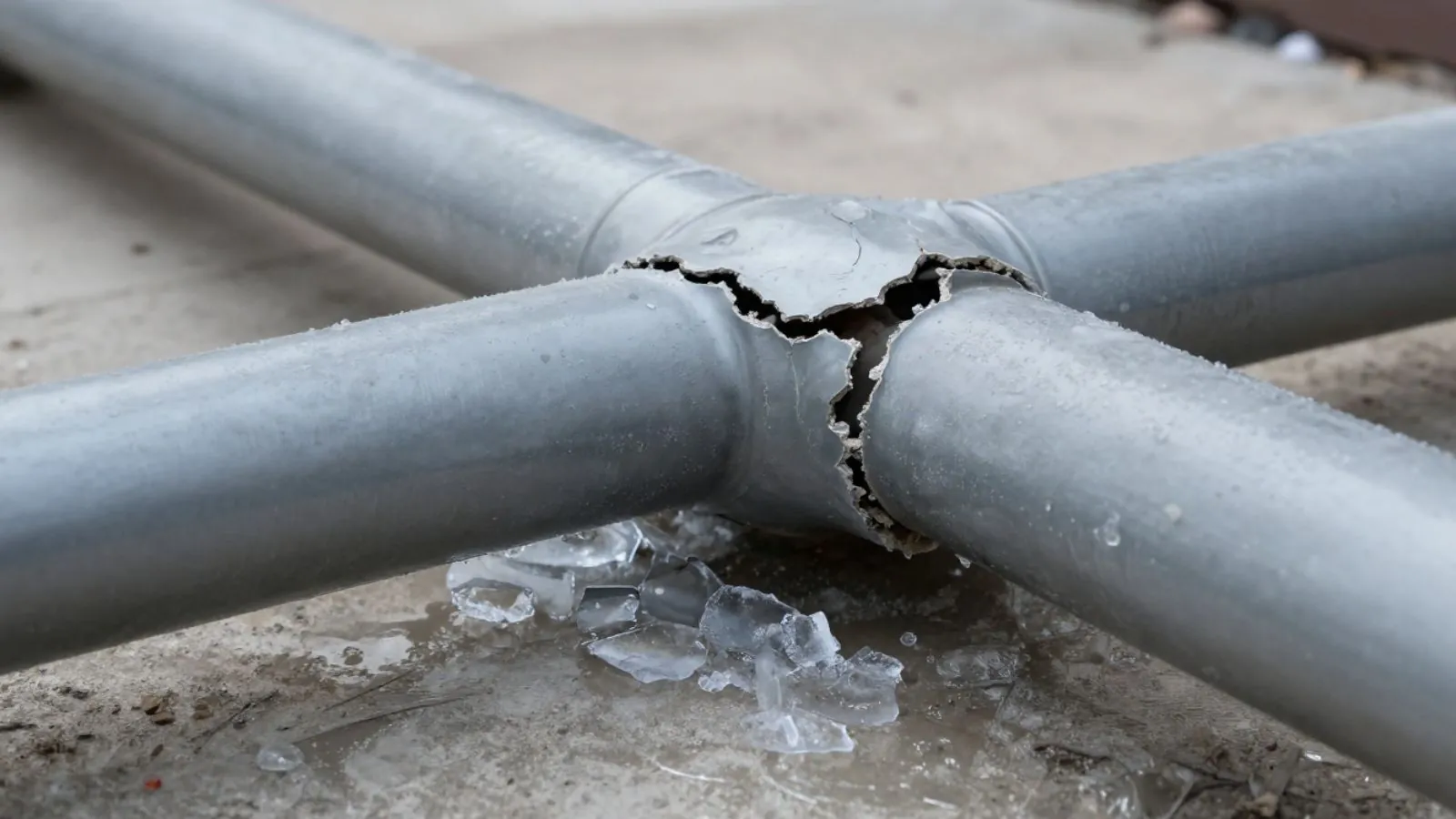
Frozen pipe water damage is the flooding and wet structure that follows when water freezes inside a supply line, splits the pipe and then runs when the ice melts. If a pipe has frozen or has just started leaking in Bellmore, close the main shutoff, open the lowest faucet to drain the line and call our 24/7 line before the thaw spreads the damage.
Do not use a flame, a torch or a heat gun on a frozen pipe, and do not walk into a room where water is near outlets or the panel. Cut power only if the panel is dry and reachable, and call 911 or your utility first for any electrical or gas risk. Then reach dispatch, where same-day response is offered when available.
Why a frozen pipe floods when it thaws
Water expands as it freezes. The ice plug itself does not usually burst the pipe. Pressure builds in the trapped water between the plug and a closed faucet, and the weakest point of that section gives way, often a few feet from the ice.
The split can sit unnoticed while the pipe is frozen, because the ice is still acting as a plug. When the temperature rises or the heat comes back on, the plug melts and the pipe runs at full household pressure through the split.
Frozen, split or thawed: what each stage means
| Stage | What you may see | What to do |
|---|---|---|
| Frozen, no leak yet | No water from a faucet, frost on exposed pipe, a bulge or cold spot | Open the faucet, close the main if you suspect a split and call |
| Split but still frozen | Damp spots, a stain on a wall or ceiling, a hissing sound | Close the main and call, because water will run as the ice melts |
| Thawed and running | Water spraying, dripping or soaking a wall or ceiling | Close the main, drain the line, photograph the damage and call at once |
| Thawed and dry | Water returns normally with no stain | Still check the pipe and nearby walls for slow weeping before leaving it |
What to do when a pipe is frozen but not yet split
- 1
Close the main
Stop supply to the house if you cannot tell where the ice is.
- 2
Open a faucet
Open the lowest faucet so melting water has somewhere to go.
- 3
Warm the space
Raise the room temperature and open cabinet doors under sinks.
- 4
Call before you thaw
A split cannot be seen under a wall, so ask for an inspection first.
Shut off the main, then call. After-hours and weekend calls are routine on this line.
What not to do
Never use an open flame, a propane torch or a heat gun on a pipe. They can ignite framing and can crack a weakened pipe. Do not leave a faucet closed on a pipe you think is split, and do not cut power if you must stand in water to reach the panel.
Where pipes freeze inside a house
Exterior walls
A pipe on the cold side of insulation can chill faster than the room around it.
Crawl spaces and garages
Unheated spaces with exposed supply lines give ice room to form. See crawl space water damage for what happens under the floor.
Attics and cabinets
Lines near roof decking or on an outside wall behind a sink cabinet get little warmth.
Rooms left cold
A vacant room or a shut-off wing can fall low enough to freeze a line even in a heated house.
After the thaw: what the damage usually looks like
A split behind a wall wets insulation and drywall first, then runs down to the bottom plate and into the subfloor. A split above a ceiling stains and sags the ceiling below, and water can travel along joists to rooms that seem unrelated.
We follow that path with a moisture meter and a thermal camera, pull standing water, and dry the structure with air movers and LGR dehumidifiers. A stained or bowed ceiling is its own repair, and ceiling water damage repair explains what that involves.
Bellmore homes, the supplier on your bill and permits
Your water bill names your supplier, which matters if you cannot find the main valve or the curb stop. The Town of Hempstead Water Department does not list Bellmore among its districts, so the bill is the reliable place to look.
If a section of pipe has to be replaced, ask the Town of Hempstead Building Department whether a permit applies, since permit rules vary and the department enforces plumbing codes. We handle the water damage side, and a licensed plumber handles the pipe. ZIP 11710 and nearby towns such as Freeport share one dispatch line.
What affects the cost of frozen pipe cleanup
We explain scope and price before work starts. These factors usually decide the size of the job.
| Factor | How it changes the job |
|---|---|
| How long the pipe ran after the thaw | More run time means more saturated material and more drying days |
| Location of the split | A split inside a wall or ceiling takes more exposure work than one under a sink |
| Rooms and floors reached | Water that followed framing to lower floors widens the scope |
| Materials involved | Plaster, wood floors and carpet pad dry differently than drywall and tile |
| Repair scope | Drying is one cost, while pipe replacement and finish repair are separate decisions |
A frozen pipe that splits and floods is usually sudden and accidental damage, and insurance often responds. Damage from a slow weep left unrepaired often is not covered, and flood damage usually needs a separate flood policy. Check your policy or ask your insurer, and document the damage before cleanup. A burst line from another cause has its own page at burst pipe water damage.
Frequently asked questions
Yes. The line is answered 24 hours a day, every day. Same-day response is offered when available, and we cannot promise an exact arrival time, but we will tell you what to do while you wait.
If you suspect a split, close the main and call first. If you thaw it yourself, use only gentle room heat or a hair dryer, never a flame, and keep a faucet open to relieve pressure.
You often cannot see it until the ice melts. Damp drywall, a ceiling stain, a hissing sound or pressure that drops after a thaw all point to a split.
It is often where the water line enters the house, near the meter or water heater. Your bill names your supplier, who can help if you cannot locate it.
A sudden split that floods the house is often covered, while damage from a slow leak often is not. Check your policy or ask your insurer, and photograph the damage before cleanup.
A licensed plumber repairs the pipe. We dry and restore the water damage, and we can coordinate timing so the repair and the drying do not get in each other's way.
Call the line any hour and describe what you see. We will explain the scope and price before work starts.