
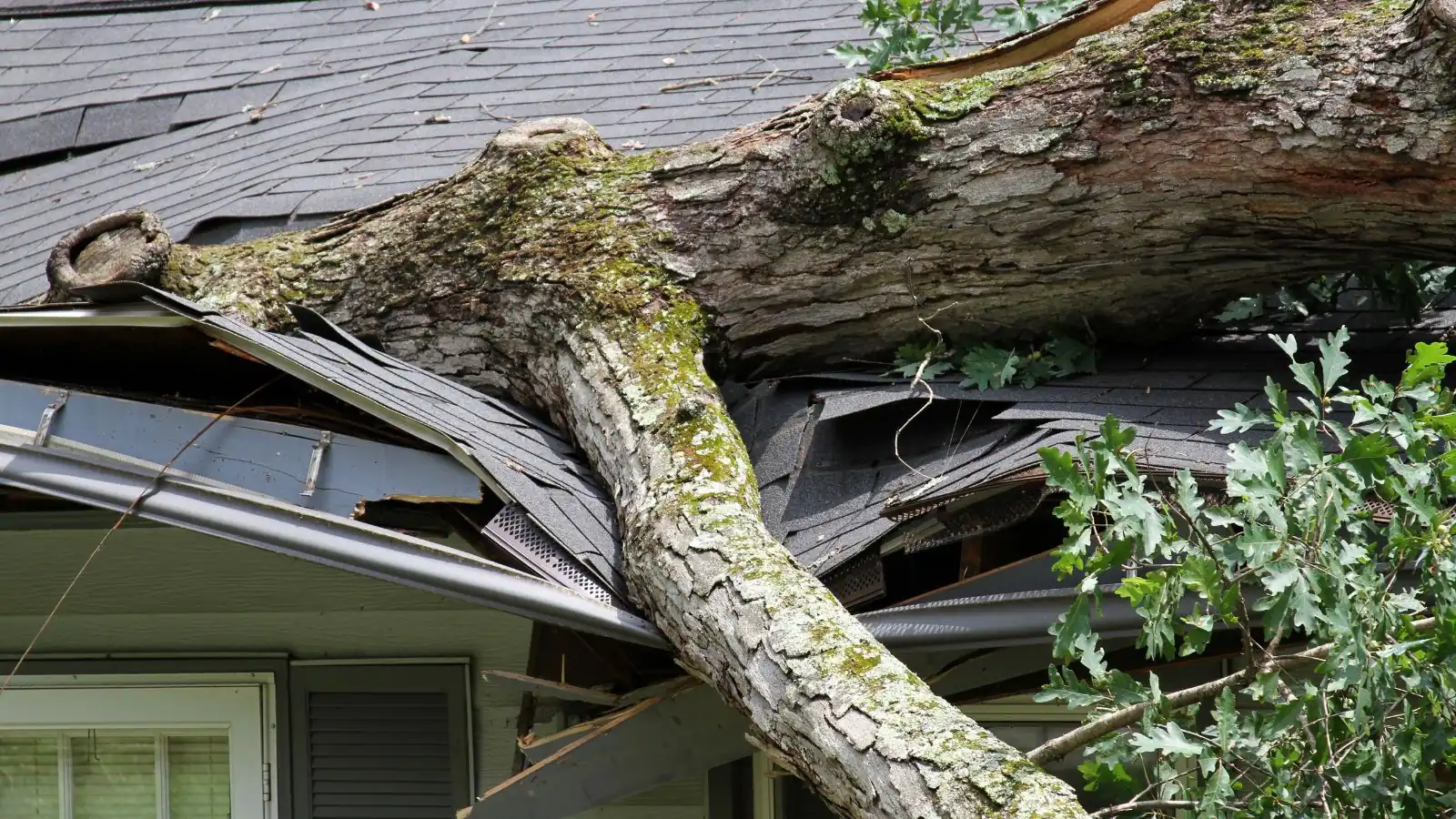
Storm water damage is the wetting of a building by rain, wind and debris that breach the envelope, meaning the roof edges, siding, windows, doors, vents and gutters that are supposed to keep weather out. It is different from rising flood water, and it is different from a single roof leak, because storm rain usually enters in several places at once.
If the storm is still going, stay clear of wet ceilings, move people away from bulging drywall and keep out of rooms where water has reached outlets or the panel. Our line is open 24/7, so call when it is safe to do so. While you wait, move valuables off the floor, put buckets under active drips and photograph every wet area before anything is moved.
When storm water is an emergency
Treat it as an emergency when water is running down walls, when a ceiling is bowing, when insulation is soaked or when rain is coming in faster than you can catch it. Those are the conditions where drywall softens in hours and framing stays wet for days.
It is also an emergency when the storm hits at night. Water that enters at 2 a.m. and is found at 7 a.m. has had five hours to travel. Same-day response is offered when available, and after-hours calls get the same attention as daytime ones.
How storm water gets into a Bellmore house
Wind changes the direction of rain, so water that never bothers a house on a calm day gets pushed sideways into gaps. The common entry points are listed below, and a crew checks all of them rather than only the room where you saw the stain.
Window and door frames
Wind-driven rain forces water past old caulk and worn weatherstripping, then runs down inside the wall.
Roof edges and flashing
Lifted shingles and loose flashing at chimneys and dormers let water under the roof covering.
Siding, vents and trim
Gaps behind siding, bath fans and dryer vents give water a path into the wall cavity.
Gutters and downspouts
Overflow at a clogged gutter runs behind the fascia and down the exterior wall.
Call the 24/7 line from a dry spot. We explain the scope and the price before work starts.
Storm damage, flood damage and a plain roof leak
The three get mixed up on the phone, and the right starting point differs for each.
| Situation | What is happening | Where we start |
|---|---|---|
| Storm water | Rain and wind breach the envelope in more than one spot | Trace every entry point, then dry the walls and ceilings below them |
| Flood water | Water rises from the ground, a creek or a tidal surge and enters low | See flood damage cleanup, because contaminated water needs different handling |
| Plain roof leak | One spot under a failed roof section drips through a ceiling | See ceiling water damage repair for stains, sagging and roof leaks |
What Bellmore storms have shown homeowners
The National Weather Service records that Hurricane Irene in August 2011 put water up to 4 feet deep in Bellmore, and local press reported about five inches of rain in six hours in 2014. Newbridge Road at Sunrise Highway was among the spots that flooded then. The practical lesson is that a storm can bring rain from above and water from below in the same night, and each needs its own response.
Linden Street flooded from Newbridge Creek in 2020. If your wet floor is near a creek or low street after a storm like that, the water may be flood water rather than roof water, and it is worth saying so on the call.
What we do after a storm leak
The sequence is simple, and each step feeds the next.
- 1
Find the entry
A moisture meter and thermal camera trace water back to where it got in.
- 2
Protect the home
Temporary covers and drip control limit more water entering.
- 3
Dry the structure
Air movers and dehumidifiers run until readings return to normal.
- 4
Plan the repair
Ceilings, walls and finishes are repaired or coordinated as you choose.
While you wait for the crew
Safe steps during and after the storm
- Keep people away from sagging ceilings and wet outlets, and call 911 or your utility for downed wires or a gas smell.
- Place buckets and towels under active drips, and lift rugs and electronics off wet floors.
- Take dated photos of every wet area, the storm damage outside and any damaged contents.
- Do not climb onto a wet roof or tarp it yourself in wind. Leave roof access to the crew.
- Keep receipts for emergency supplies, because your insurer may ask for them.
Ask about the drying plan before you agree
A good storm job has a written scope that names each wet room, the equipment going in and how many days it is expected to run. Ask what readings will tell the crew the job is finished, because the answer should be numbers and not an opinion.
Also ask what happens if more water shows up behind a wall once drying starts. Storm leaks often hide a second entry point, and it is better to know in advance how added scope is handled.
What affects the cost of a storm water cleanup
Storm jobs vary widely. We explain scope and price before work starts, and these factors decide the number.
| Factor | How it changes the job |
|---|---|
| Number of entry points | More places where water got in means more rooms to dry and check |
| Time before drying began | Hours or days of wetting decide how much material can be saved |
| Insulation and drywall soaked | Saturated insulation holds water and usually has to be removed |
| Ceilings and floors below | Water moves down, so every level under the entry point is part of the scope |
| Temporary protection needed | Covering openings and controlling drips adds work before drying begins |
Insurance often responds to sudden and accidental storm damage, and a flood policy is usually a separate policy. Wear and tear or a roof left in poor repair is often treated differently. Check your policy or ask your insurer, and document the damage before cleanup. We record moisture readings and photos so you have them ready. Homes in ZIP 11710 get the same documentation. Our Freeport page covers the neighboring town.
After the drying: repairs and what to watch for
Once readings are normal, wet drywall, baseboards and insulation are repaired or replaced. Wall and drywall repair covers that stage, and structural drying explains how the equipment and readings work.
Watch for musty smells and dark spots in the weeks after a storm. They usually mean something stayed damp, and the fix starts with drying the source rather than covering the stain.
Frequently asked questions
Yes. The dispatch line answers 24 hours a day, every day, including nights, weekends and holidays. Same-day response is offered when available, and we cannot promise an exact arrival time.
No. Storm water enters through the roof, walls and windows. Flood water rises from the ground or a tidal surge, and it often carries contamination. We ask where the water came from so the right steps are used.
Ask when you call. Temporary protection is part of some storm jobs, and we will explain what is included before work starts.
Sudden and accidental storm damage is often covered, flood usually needs a separate flood policy, and neglect or wear is often not covered. Check your policy or ask your insurer.
As soon as water has stopped entering. Drywall and insulation hold moisture quickly, and early drying saves more material.
Water follows framing, pipes and ceiling edges, so the stain is often away from the entry. Moisture mapping shows the real path.
Call the line any hour and describe what you see. We will explain the scope and price before work starts.