
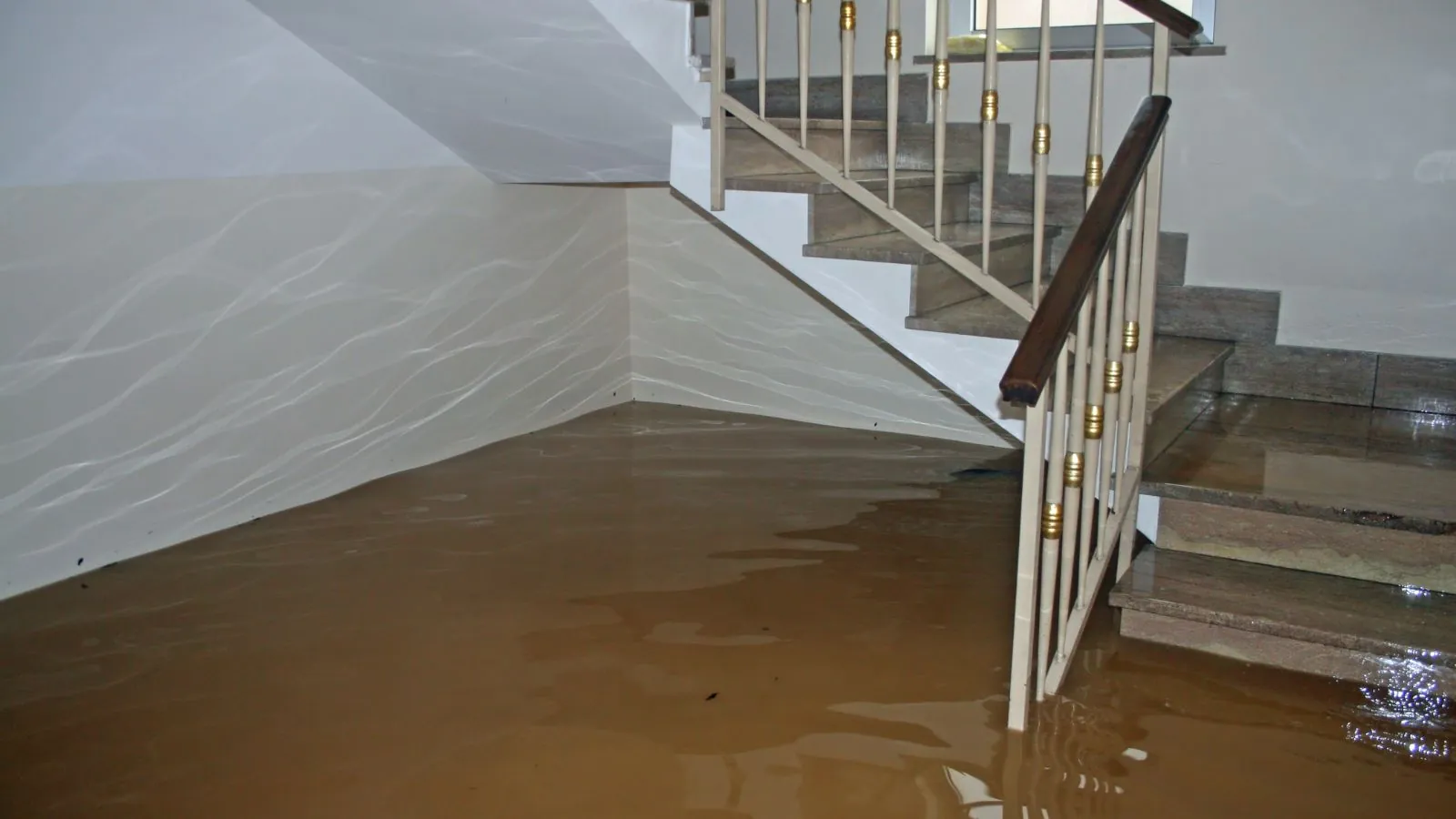
Flood damage restoration is the cleanup, drying and repair of a building after outside water enters it, which in Bellmore, NY usually means heavy rain, water backing up through storm drains or tidal surge on the South Shore. If floodwater is in your house now, get everyone out of the water, stay away from power lines and the breaker panel, and call our 24/7 line from a dry spot.
Do not wade through floodwater to reach the panel. Cut power only if it is dry and reachable, and call 911 or your utility first for any electrical or gas risk. While you wait, photograph the water line and do not start cleaning, because New York State advises documenting your losses before cleanup. Same-day response is offered when available through dispatch.
Floodwater in the house: what to do first
Before anyone touches anything
- Get people and pets out of standing water. Floodwater can hide debris, chemicals and live electrical hazards.
- Stay away from downed wires and from the breaker panel if the floor around it is wet. Call 911 or your utility for any electrical or gas risk.
- Do not drive through flooded streets, because depth and road damage are hard to judge.
- Photograph the water line on the walls, damaged items and the street outside before anything moves.
- Call your insurer and then the 24/7 line, and ask what documentation each one wants.
Four kinds of flooding, and why the source matters
| Type of flooding | Typical water category | What changes in the cleanup |
|---|---|---|
| Heavy rain on the surface | Category 2 or 3 | Water crosses lawns, streets and drains before it enters, so porous materials are often removed |
| Storm drains backing up | Category 3 | Water carries sewage and street debris, so strict protective steps apply |
| Creek or canal overflow | Category 3 | Silt and contaminants settle in carpet, wall cavities and under floors |
| Coastal or tidal surge | Category 3 | Salt and debris corrode metal and leave residue that needs cleaning |
What Category 2 and Category 3 water mean
Water category describes how contaminated the water is. Category 1 is clean supply water. Category 2 carries some contamination, and Category 3 is grossly contaminated and includes floodwater from outside, sewage and anything that has crossed soil or drains.
Floodwater is treated as Category 3 until shown otherwise. That changes the work. Porous materials such as carpet, pad and some insulation usually come out, hard surfaces are cleaned and treated, and crews wear protective gear. The ANSI/IICRC S500 standard is the published guide, and you can ask any company whether its crews work to it.
Call from a dry spot. We explain the safety steps, the scope and the price before work starts.
Bellmore flood history, and what it means for your address
The National Weather Service records that Hurricane Irene in August 2011 left water up to 4 feet deep in Bellmore. Local press reported that Hurricane Sandy in 2012 put several feet of water in parts of South Bellmore and South Merrick, with low streets south of Merrick Road flooding first when a tidal surge came back through storm drains.
Rain alone has done it too. Reports from 2014 described about five inches of rain in six hours, with water at Newbridge Road and Sunrise Highway, and in 2020 Linden Street flooded from Newbridge Creek. The NWS also logged a coastal surge in December 2022 of about 3 feet that flooded basements in Bellmore.
The takeaway is to know your exposure before the next storm. Check the FEMA Flood Map Service Center for your address and ask your insurer what is covered. A 2019 drainage project on Shore Road in South Bellmore shows the problem is recognized, not that every street is protected.
How a flood job is done, in order
- 1
Make it safe
Power, gas and structural hazards are checked before work starts.
- 2
Extract and remove
Standing water comes out, and wet porous materials are bagged and removed.
- 3
Clean and treat
Hard surfaces and framing are cleaned and treated for contamination.
- 4
Dry and verify
Air movers and dehumidifiers run until moisture readings are normal.
Flooding in a basement, a finished lower level or a first floor
The same flood does different damage on different levels. In a basement, water pools at the lowest point and soaks stored items and finished walls from the bottom. A first floor often loses flooring, baseboard and the lower section of drywall.
Standing water comes out through emergency water extraction, and a flooded lower level has extra steps covered at basement water damage cleanup. If the water came up a drain and smells like sewage, sewage backup cleanup applies. Our neighbors in Freeport face similar surge flooding, and we serve ZIP 11710 and nearby towns from one line.
What affects the cost of flood cleanup
Flood jobs vary widely, so scope and price are explained before work starts. These are the biggest drivers.
| Factor | How it changes the job |
|---|---|
| Depth and duration of the water | Deeper, longer flooding reaches more materials and more levels |
| Water category | Category 3 water means more removal, cleaning and protective steps |
| Square footage affected | More area means more equipment, labor and drying days |
| Materials involved | Carpet, pad and insulation usually come out, and hardwood and plaster need case-by-case decisions |
| Repair scope | Cleanup and drying come first, and rebuilding walls and floors is a separate scope |
Insurance is where flood differs most. The New York Department of Financial Services says the typical homeowners or renter policy does not cover flood damage, and a separate policy through FEMA's National Flood Insurance Program may. Water backup and sewage damage may be covered by endorsement but are typically excluded when caused by flood. File as soon as possible and check your policy or ask your insurer.
Frequently asked questions
Yes. The dispatch line is answered 24 hours a day, every day, including nights and weekends. Same-day response is offered when available, and we cannot promise an exact arrival time.
Treat it as contaminated. Avoid contact, wear protective gear if you must enter, and keep children and pets out until the cleanup is done.
The typical homeowners policy does not, according to the New York Department of Financial Services. A separate flood policy may. Check your policy or ask your insurer.
Use the FEMA Flood Map Service Center with your address, and ask your lender or insurer. The Town of Hempstead Building Department can also answer permit and rebuild questions.
Carpet, pad, insulation and soaked drywall are usually removed because they absorb contaminated water. We explain what comes out and what can be cleaned before work starts.
We document damage with photos, moisture readings and a written scope you can send. Coverage decisions stay with your insurer.
Call the line any hour and describe what you see. We will explain the scope and price before work starts.