
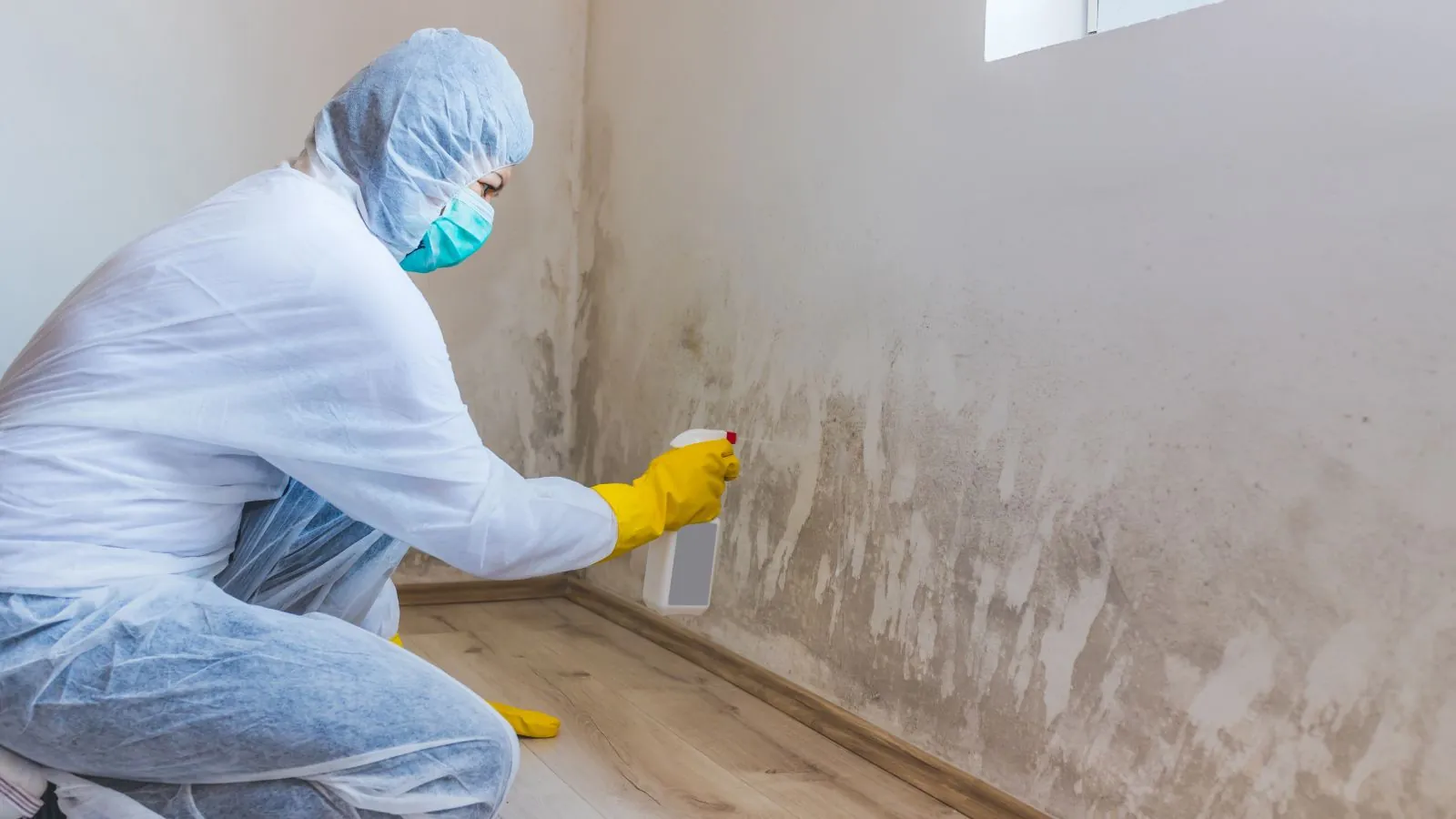
Nothing kills black mold instantly. Mold is a living growth that needs moisture, and a quick spray may discolor a surface without removing what is growing in the material under it. The real fix is stopping the moisture, then cleaning or removing what mold has colonized.
This guide explains why instant fixes disappoint and where small cleanup stops being sensible. It does not give chemical instructions, because mixing household cleaners can be dangerous. Never combine cleaning products, and read the label of anything you use.
Why a quick spray does not settle it
On a hard, sealed surface, careful cleaning can remove surface growth. On drywall, insulation, carpet and wood, mold grows into the material. A spray that lightens the stain does not reach the roots, and the stain may return as soon as the area gets damp again.
The goal in published practice is to remove or clean the contaminated material while controlling spread, not to apply a product and hope. That is the approach described by the ANSI/IICRC S520 standard for mold remediation.
Moisture is the cause, so moisture is the first fix
Mold cannot grow without water. A leaking pipe, a roof leak, a clogged condensation line or a damp basement wall provides it. Until that source is repaired, any cleaning is temporary.
Find the source first. Look for stains that spread from a pipe, a window, a ceiling edge or the base of a wall. If the area is damp, drying equipment and moisture readings belong in the plan before anyone scrubs.
Call the 24/7 line. We explain what is wet, what needs to come out and what the scope looks like before work starts.
What small cleanup can handle and where it stops
| Situation | Reasonable next step | When to call a professional |
|---|---|---|
| A small spot on a sealed tile or fixture | Cleaning with a product used exactly as labeled, with ventilation | If the spot returns quickly |
| Stain on painted drywall near a leak | Fix the leak and dry the area first | If the drywall is soft, swollen or the stain grows |
| Growth on carpet or pad | Treat the source of wetness first | Most carpet and pad affected by mold is removed |
| Musty smell with no visible growth | Look for hidden moisture | If the smell persists after drying |
| Growth behind a wall or above a ceiling | Do not open it yourself | Contained removal is the safer route |
Safety rules that matter more than any product
Never mix cleaning products. Some combinations release hazardous fumes. Use only what the label allows, keep the room ventilated and keep children and pets out of the area while you work.
Avoid sanding, scraping or brushing dry mold, since that can throw material into the air. If you are not sure what you are looking at, treat it as something to have inspected. Health questions of any kind belong with a physician.
What a professional does differently
A remediation crew starts by finding the extent of the problem with moisture meters and, where needed, small inspection openings. The work area is sealed, filtered air machines run and contaminated materials are removed and bagged.
Afterward the area is cleaned and left to dry, and clearance testing is sometimes done by an independent party. Our mold remediation page describes this sequence, and if the moisture source is still active, structural drying comes first.
Signs that DIY should stop
- The affected area is larger than a small spot.
- Drywall, insulation or wood is soft, swollen or crumbling.
- The growth keeps returning after cleaning.
- You cannot find the moisture source.
- The home was flooded or sat wet for days.
In any of these cases, stop disturbing the area and get it assessed. Disturbing growth without containment can spread it to rooms that were clean.
Why people reach for bleach, and what is wrong with that
Bleach is familiar, cheap and visible in its effect, because it lightens stains. That is why it is a popular first move. On porous materials, though, the liquid can leave moisture behind, which is the thing mold needs.
The better question is whether the material is worth saving. If drywall is soft or insulation is damp, removal is the standard approach. If a hard surface has a small spot, label-directed cleaning may be enough, but the leak still has to be fixed.
What testing can and cannot do
Home test kits and lab samples can show that spores are present on a surface or in air, but they do not tell you how much material is affected or where the moisture is. They are one data point, not a plan.
A visual inspection, moisture readings and a written scope usually tell you more about what to do next. If testing is wanted for a sale or a loan, ask who performs it and how clearance is defined.
Why wet South Shore basements and walls grow mold
Local press reported that Hurricane Sandy in 2012 put several feet of water in parts of South Bellmore, and heavy rain in 2014 and 2020 flooded other Bellmore streets. Wet walls and flooring that were never fully dried are common places for hidden growth after events like these, so if your house took water, ask whether the wall cavities were opened and dried.
The Town of Hempstead Building Department enforces plumbing and electrical codes, so ask it which permits apply before rebuilding opened walls. Permit rules vary, and we do not guess at them.
We help homes across the service area, including Freeport, and our basement water damage page explains the water side of the job.
Frequently asked questions
Bleach may lighten a hard surface, but it does not solve the moisture problem and is not a remediation on porous materials. Never mix it with other cleaners, and read the label before use.
It is sometimes used on small hard-surface spots, but it does not replace removing wet porous material or fixing the moisture source.
You often cannot tell by sight. A musty smell, a spreading stain near moisture or a soft surface are reasons to have the area inspected.
Painting over growth does not remove it, and the stain may come back through the paint. The material and the moisture need attention first.
Not always. Testing is a separate choice, often done by an independent party. Ask what the result would change before paying for it.
Any home that took on water and was not fully dried can develop growth. If your home had flooding, ask whether wall cavities were checked.
Call the line any hour and describe what you see. We will explain the scope and price before work starts.