
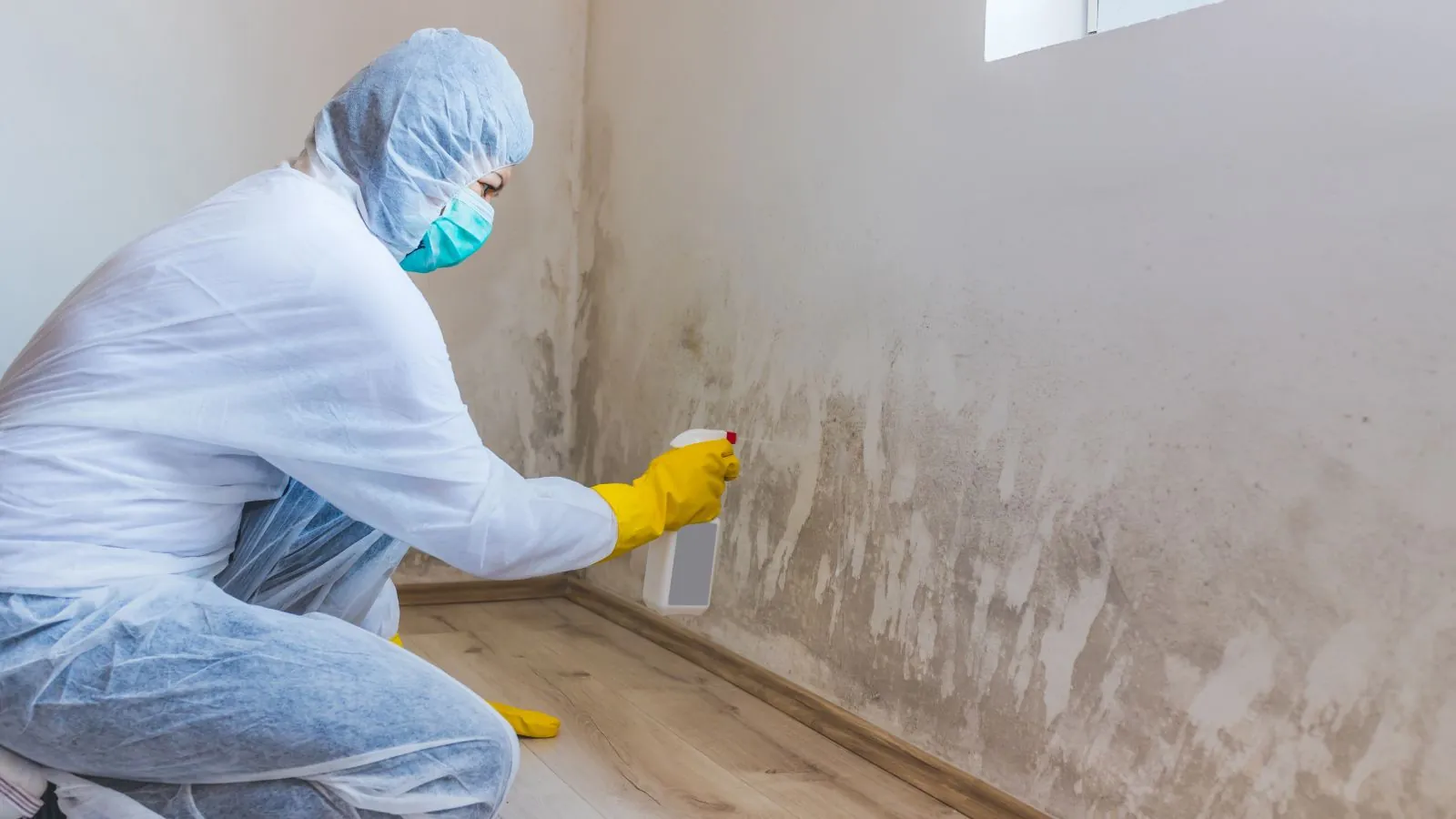
Mold in a home stains surfaces, softens materials that stay wet, leaves a musty odor and spreads wherever moisture lets it. It is a sign that water has been present, and the damage to the building often comes from the water as much as from the growth.
This guide stays on the building side. If you or someone in your home has a health concern that you connect to mold, talk to a physician, since that question is outside what a restoration company can answer.
Staining and surface damage
The first thing most people see is discoloration. Mold can appear as spots or patches in black, green, gray or brown on walls, ceilings, grout, window frames and the backs of furniture. It often starts in corners and along baseboards where air moves less and moisture lingers.
On painted surfaces, the stain can show through repeated painting. On wallpaper and some textured finishes, growth can lift or discolor the surface. Cleaning the surface does not always remove what is underneath.
What happens to drywall and insulation
Drywall has a paper face that holds moisture. When it stays wet, it can soften, swell, crumble or peel, and mold can grow on the paper and in the gypsum. Insulation inside wall cavities can hold moisture and growth where you cannot see it.
This is why a small visible spot can hide a larger problem. A moisture meter and, when needed, a small inspection opening show whether the wall is wet inside. Wet drywall and insulation that cannot be dried are normally removed.
Call the 24/7 line. We check for moisture and explain the scope before work starts.
Wood, subfloors and framing
Wood that stays damp for a long time can lose strength and decay. Mold is often the early sign, and decay is the longer-term result of sustained moisture. Subfloors, baseboards, trim and framing near a leak are the usual places.
If you notice soft spots, a sagging floor or trim that crumbles, the issue goes beyond surface mold. A building professional should look at the wood, and the moisture source must be fixed first.
Odor and indoor air quality
A musty smell is one of the most common signs. Odor can come from active growth, from damp materials or from both. It may be strongest in a closet, basement or room that has been closed up.
Odor alone does not prove mold, and mold does not always smell. If you notice a persistent musty odor, look for moisture sources and consider an inspection. Questions about how air quality affects people belong with a physician or your local health authority.
How the damage tends to progress
| Stage | What you may see | What it suggests |
|---|---|---|
| Early | A musty smell and a faint spot near a leak | Moisture is present and may still be active |
| Developing | Spreading stains, peeling paint, bubbling finishes | Materials have stayed damp |
| Established | Soft drywall, swollen trim, visible growth in corners | Wet materials may need removal |
| Advanced | Soft framing, sagging floors, widespread odor | Structural materials may be affected, so get an assessment |
What stops the damage
The sequence is the same in nearly every case. Find and fix the moisture source, dry the structure, remove materials that cannot be dried or cleaned, clean the area under controlled conditions and rebuild. Skipping the first step means starting over.
The published ANSI/IICRC S520 standard describes mold remediation practice. Our mold remediation page explains the steps, and structural drying explains how moisture is brought down. Never promise yourself that growth will not return unless the water source is truly resolved.
Why mold spreads where it does
Mold follows moisture and food. Dust, paper, wood and drywall paper supply food, and a damp area supplies the water. That is why growth often begins in closets, behind furniture, around windows and below leaking pipes.
Air movement moves spores, but growth only takes hold where conditions allow. Drying the area and fixing the leak removes the conditions, which is why moisture control is the center of every remediation plan.
Effects on belongings and finishes
Fabrics, leather, paper and books are common casualties. They can stain, smell and warp when damp. Cardboard boxes in a basement wick water up from the floor and can grow growth inside.
If belongings were wet, photograph them before disposal and ask your insurer about documentation. Items that can be cleaned should be separated from those that cannot, and valuables are worth discussing with a specialist.
When to get a professional involved
Call for an assessment when stains are spreading, when materials feel soft, when the smell persists after drying or when the area is more than a small spot. A short inspection with moisture readings tells you whether you are dealing with a surface issue or a hidden one.
Ask any company how it contains the work area and whether its crews work to the ANSI/IICRC S520 standard. A plain answer is a good sign.
How this shows up in Bellmore houses
Local press reported that heavy rain in 2014, with about 5.2 inches in six hours in Bellmore, flooded the Newbridge Road and Sunrise Highway intersection and a basement on Mitchell Street. A basement that took on water like that and was not dried fully can develop hidden growth in wall bottoms and under flooring, so check those spots after any wet event.
The same press noted flooding on Linden Street from Newbridge Creek in 2020. If your home is near the creek, make a habit of checking basement corners and closets for dampness after heavy rain.
The service area page lists where we work, including Freeport, and water extraction describes what happens when standing water has to come out first.
Frequently asked questions
Mold itself marks and softens materials, and the moisture that feeds it can cause wood decay and swelling. The fix is controlling moisture and removing what cannot be saved.
Not reliably by sight. A stain that spreads, smells musty or sits near a leak is worth inspecting.
Ask a physician. A restoration company can assess the building but cannot answer health questions.
Paint can hide a stain for a while, but the moisture and the material underneath still need attention.
No. Damp materials can smell musty without visible growth. Look for moisture and consider an inspection.
Homes near Newbridge Creek and low ground south of Merrick Road have had flooding reports, so check wall bottoms and corners after heavy rain.
Call the line any hour and describe what you see. We will explain the scope and price before work starts.