
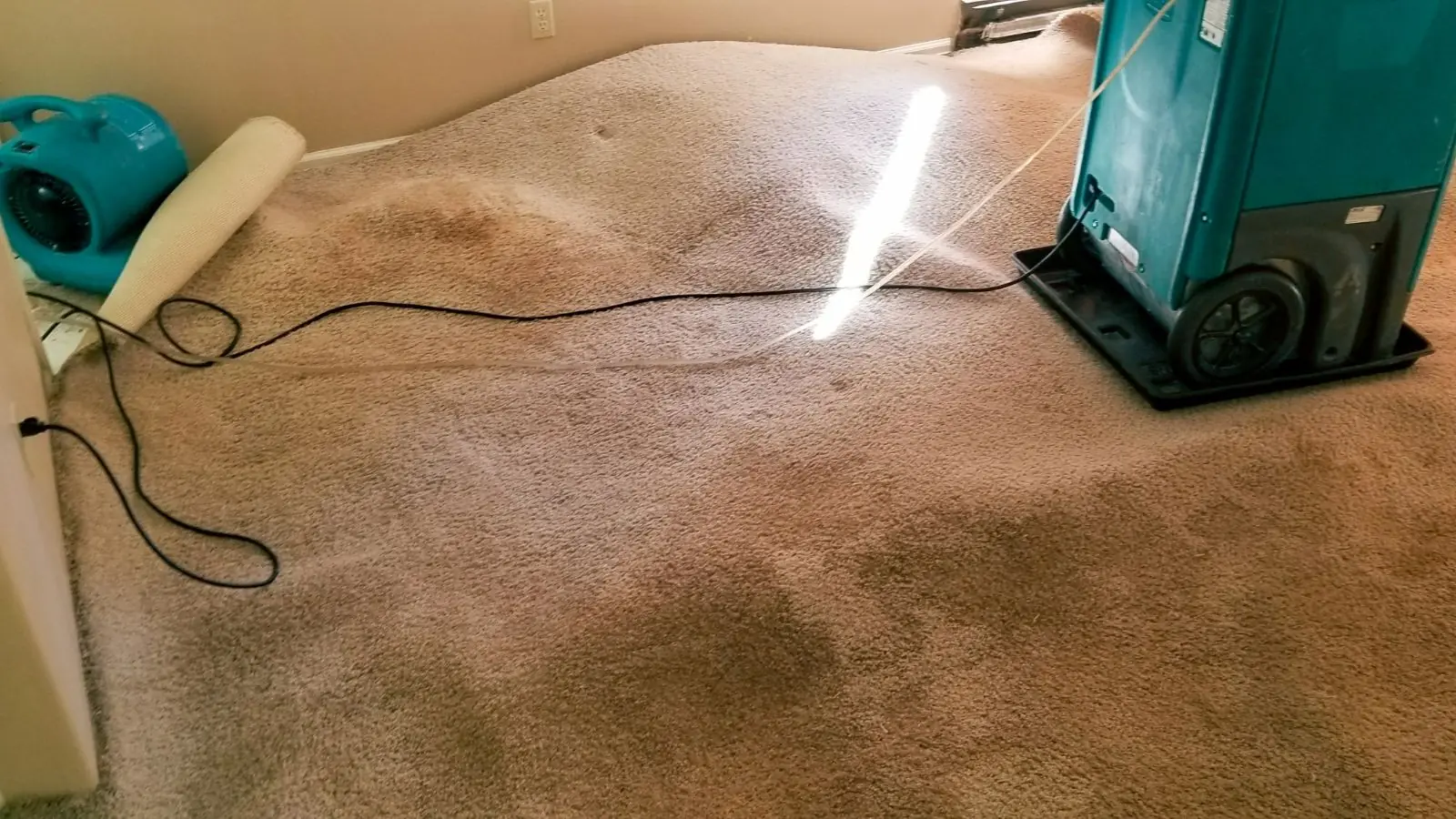
A musty smell after water damage usually means some material is still damp. The odor can come from carpet pad, insulation, the back of drywall, a subfloor or a closed-up cabinet that never fully dried. Air fresheners cover it for a day, but the cause is moisture.
The useful question is where the dampness is hiding. This guide walks through the usual spots, how to check them safely and what it means when the smell returns after you thought the job was done.
Why the smell lingers after a leak
Materials that were wet for a day or more can hold moisture for weeks when they are covered up. Carpet pad, insulation and the paper face of drywall are common culprits, and they do not dry well in a closed room.
Odor can also come from the surface of a material that dried too slowly. If the original drying was cut short, damp pockets remain behind baseboards, inside wall cavities and under flooring, and they keep smelling until they are dried or removed.
Where to look first
Common hidden spots
- The bottom of walls behind furniture, especially exterior walls.
- Inside cabinets and vanities near plumbing, where the back panel may be damp.
- Under carpet at the edges, where the pad may still be wet.
- Closets, since closed doors trap humid air and the floor may be damp.
- Basement corners and the base of stairs, where water collects first.
- Around windows and doors where rain may have entered.
Call the 24/7 line. We use moisture readings to find what is still wet and explain the scope before work starts.
How to check without tearing things apart
Start with your senses. Press a hand against the wall base and the floor. Cool, clammy surfaces or a spongy feel suggest moisture. Look for dark edges, bubbling paint, curling flooring and stains that were not there before.
A moisture meter turns guesses into numbers. Restoration crews use pin and pinless meters and thermal cameras to find damp areas behind surfaces. If the smell is strong and you cannot find the source, readings are the quick way to settle it.
What the smell can and cannot tell you
| What you notice | What it often suggests | Next step |
|---|---|---|
| Musty smell, no visible stain | Hidden damp material | Take moisture readings |
| Smell plus a spreading stain | Active moisture and possible growth | Find and fix the source, then dry |
| Smell only in a closed closet | Trapped humidity or damp flooring | Open it up, dry it and check the floor |
| Smell returns after cleaning | Material still wet or growth in it | Look inside the wall or under flooring |
| Smell with a sewage odor | A drain or sewer issue, not just dampness | Call the 24/7 line, since contaminated water needs safe handling |
Why odor control alone does not finish the job
Deodorizers and ozone machines can reduce odor, but they do not dry a wet wall. If the smell comes back within days of treatment, there is moisture feeding it.
The reliable path is to find the damp material, dry it with air movers and dehumidifiers or remove it if it cannot be saved, and verify with readings that it reached normal. Our structural drying page explains that process, and if growth is present the mold remediation page covers the next step.
When the smell should push you to act quickly
Call someone promptly if the smell is strong, if there is a visible stain that spreads, if materials feel soft or if the water came from a sewer or drain. Do not wait for a smell to fade on its own, because dampness left in place keeps causing damage.
If anyone in the home has a health concern that seems related to the air, speak to a physician. A restoration company can check the building but cannot give health advice.
Ventilation and humidity habits that help
Once the structure is dry, simple habits keep it that way. Run bathroom fans during and after showers, vent the dryer outdoors and keep closets from becoming sealed boxes. A hygrometer, a small and inexpensive gauge, shows indoor humidity at a glance.
Basements often run damp in humid months. A dehumidifier set to a steady level keeps cool walls from collecting condensation. Empty or drain the unit regularly, because a full tank stops working.
Belongings that hold the odor
Upholstery, mattresses, rugs and cardboard keep the smell after the structure dries. Items that were wet for more than a day may need professional cleaning or replacement. Photograph anything you discard, in case you need to document the loss.
Do not seal wet items in plastic bags for long. Trapped moisture can make the odor worse and spread it to other belongings.
What this means in a Bellmore house
The Town of Hempstead Building Department enforces plumbing and electrical codes. If your musty smell traces back to a plumbing leak inside a wall, ask the department what permits apply before repair, because permit rules vary and we do not guess at them.
Local press reported that a Mitchell Street basement flooded during heavy rain in 2014, and that Linden Street flooded from Newbridge Creek in 2020. After a rain event like these, a basement smell that lingers is worth checking at the wall bottoms and under any flooring that sat wet.
We cover the whole service area, including Freeport, and for standing water the water extraction page explains what comes first.
Frequently asked questions
Some material is probably still damp. Moisture in pad, insulation or wall cavities can last for weeks when covered.
A household unit can help in a small area, but it will not dry wet material inside walls. Readings tell you whether it is enough.
A smell alone does not prove a hazard. If you have a health concern, ask a physician.
Odor machines mask the smell, but they do not remove moisture. Fix the wet material first.
Treat it differently. A sewage smell can mean a drain problem or contaminated water, so call the 24/7 line before disturbing anything.
Basements near Newbridge Creek and low ground south of Merrick Road have had flooding reports, so check there first after storms.
Call the line any hour and describe what you see. We will explain the scope and price before work starts.