
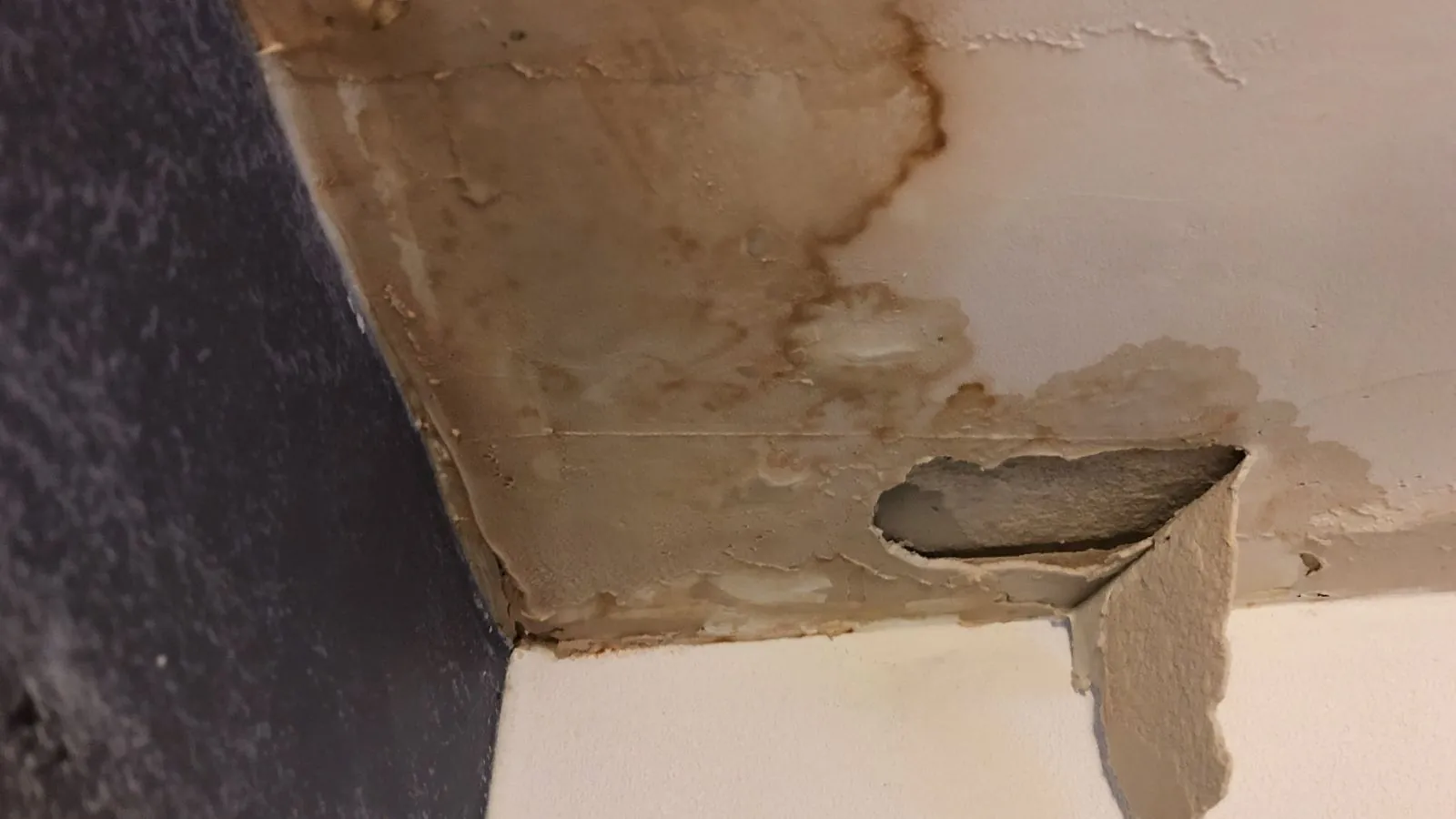
To check a home for water damage before buying, look for stains and bubbling paint on ceilings and wall bottoms. Check for soft or swollen flooring and a musty smell, and look for rust at the base of the water heater and furnace. A basement floor that feels damp or shows a tide line is another warning sign. Then ask for the seller disclosure, the flood zone and any past insurance claims for water.
None of this replaces a licensed home inspector, and a moisture reading beats a guess. But you can learn a surprising amount in the first fifteen minutes of a showing, and you can use it to decide which questions to ask before you spend money on an inspection.
Start with your eyes, your nose and your hands
Walk the house slowly and look at surfaces that meet water first. Ceilings under bathrooms and roof edges, the bottom foot of exterior walls, the corners of closets and the inside of cabinets under sinks all tell a story. Old stains often have a brown ring at the edge, and that ring can be a sign the area got wet more than once.
Smell matters as much as sight. A damp, earthy odor in a closed room or a basement usually means moisture is present even when nothing is visible. Press on baseboards and the lowest part of drywall. If it feels soft, crumbles or has a different texture from the rest of the wall, ask why.
What to check during a showing
Showing checklist
- Ceilings: any stain, sag, bubbling paint or fresh paint on only one patch.
- Walls: bulging baseboards, peeling wallpaper, cracks that run along the bottom of the wall.
- Floors: cupped or buckled boards, soft spots near doors, tiles that sound hollow or have loose grout.
- Basement: a chalky white residue, a tide line on walls, rust on the bottom of metal posts, or boxes raised on blocks.
- Utility area: rust or scale around the water heater, drips under the main shutoff, and a floor drain with a stain around it.
- Windows and doors: stained trim, swollen frames and water marks on the sills.
Room by room: where hidden water shows up
Water travels, so the visible sign is often not at the source. This table pairs what you see with what it can point to.
| Where you look | What you may see | What it can point to |
|---|---|---|
| Ceiling below a bathroom | Round brown stain or sag | A supply or drain leak above, or a failed seal around a tub or toilet |
| Wall bottoms | Swollen baseboard, bubbling paint | Past flooding, a leak inside the wall or moisture wicking up from the floor |
| Basement walls and floor | Tide line, white residue, damp odor | Repeated water entry after heavy rain or a high water table |
| Hardwood and laminate | Cupping, gaps, dark staining | Long-term moisture from below or a past spill that was not dried |
| Cabinet bases | Warped panels, stained floor of the cabinet | A slow leak at a sink supply or drain line |
Call the line and describe what you saw. We explain how a moisture assessment works and what the scope and price would be before any work starts.
Questions to ask the seller and the agent
Ask directly, and ask for answers in writing where you can. The seller knows the history of the house and the buyer is entitled to ask. Honest answers are useful even when they are uncomfortable, and vague answers are information too.
Ask before you make an offer
- Has water ever entered the house, from rain, a pipe, an appliance or flooding, and where?
- Was anything repaired afterward, and who did the work? Ask for receipts and photos.
- Has a flood insurance policy or an insurance claim for water ever been filed on the property?
- What is the flood zone for the address, and is flood insurance required by the lender?
- Is there a sump pump, and has it ever failed or been replaced?
What buyers in Bellmore should know about local flooding
Bellmore is a South Shore hamlet in Nassau County, and its low ground south of Merrick Road has a long record of water. The National Weather Service recorded water up to 4 feet deep in Bellmore during Hurricane Irene in August 2011. If the house you like sits in South Bellmore or near New Bridge, ask whether it took water then and how the seller handled it.
Local press reported that Hurricane Sandy in 2012 put several feet of water in many parts of South Bellmore and nearby South Merrick. A house that was repaired after Sandy should have documents showing what was removed and replaced. Ask for them, and compare them with what you see on the walls.
Ordinary rain has caused trouble too. Newspaper reports described about five inches of rain in six hours in 2014 and flooding along Linden Street from Newbridge Creek in 2020. If a listing is near Newbridge Creek or Newbridge Pond, walk the lot after a heavy rain if you can, and look at where the water goes.
Check the FEMA flood map for the exact address and ask your insurer about flood coverage before you close. The New York Department of Financial Services states that a typical homeowners policy does not cover flood damage, so a separate flood policy may matter on a lower lot.
When to bring in a professional
Call a licensed home inspector for a full inspection, and consider a moisture assessment when you see stains, soft materials or a damp smell. A moisture meter and a thermal camera can tell you whether a stain is old and dry or still active, which changes how you negotiate. It also helps to know whether a ceiling stain is just cosmetic or a sign of a live leak.
If the basement shows signs of past water, ask how much of it is finished. Finished walls and carpet can hide wet insulation, and a wet basement cleanup after you close is much harder on your budget than an adjusted offer before you close. A professional can explain what the readings mean, but the decision to buy is yours.
Use what you find to negotiate or walk away
Small, dry, repaired problems with paperwork are often a reason to ask for a repair or a credit, not a reason to leave. Active moisture, repeated flooding with no repairs and a seller who will not answer questions are different. They are reasons to slow down.
Keep your photos and notes from the showing. If you buy, they are a baseline for your own insurance records. If you are weighing homes in nearby towns, our service area page lists the places we cover, and Freeport has its own notes on flood exposure and village drainage.
Frequently asked questions
A musty smell and a stain with a brown ring are the most common first signs. A fresh patch of paint on one part of a ceiling or wall is also worth a question.
If you see stains, soft materials or a damp smell, it is worth asking for moisture readings. A reading shows whether an area is dry or still wet, which a visual look cannot.
Disclosure rules depend on the sale and the state. Ask the question in writing and ask for repair records, and talk with your attorney or agent about what applies to your purchase.
Use the FEMA flood map and enter the address. Your lender and your insurer can also tell you whether the property is in a special flood hazard area.
No. It depends on how often it happens, what was repaired and how the water is managed. Ask for records and get readings before deciding.
According to the New York Department of Financial Services, the typical homeowners policy does not cover flood damage. Check your policy and ask your insurer about a separate flood policy.
Call the line any hour and describe what you see. We will explain the scope and price before work starts.