
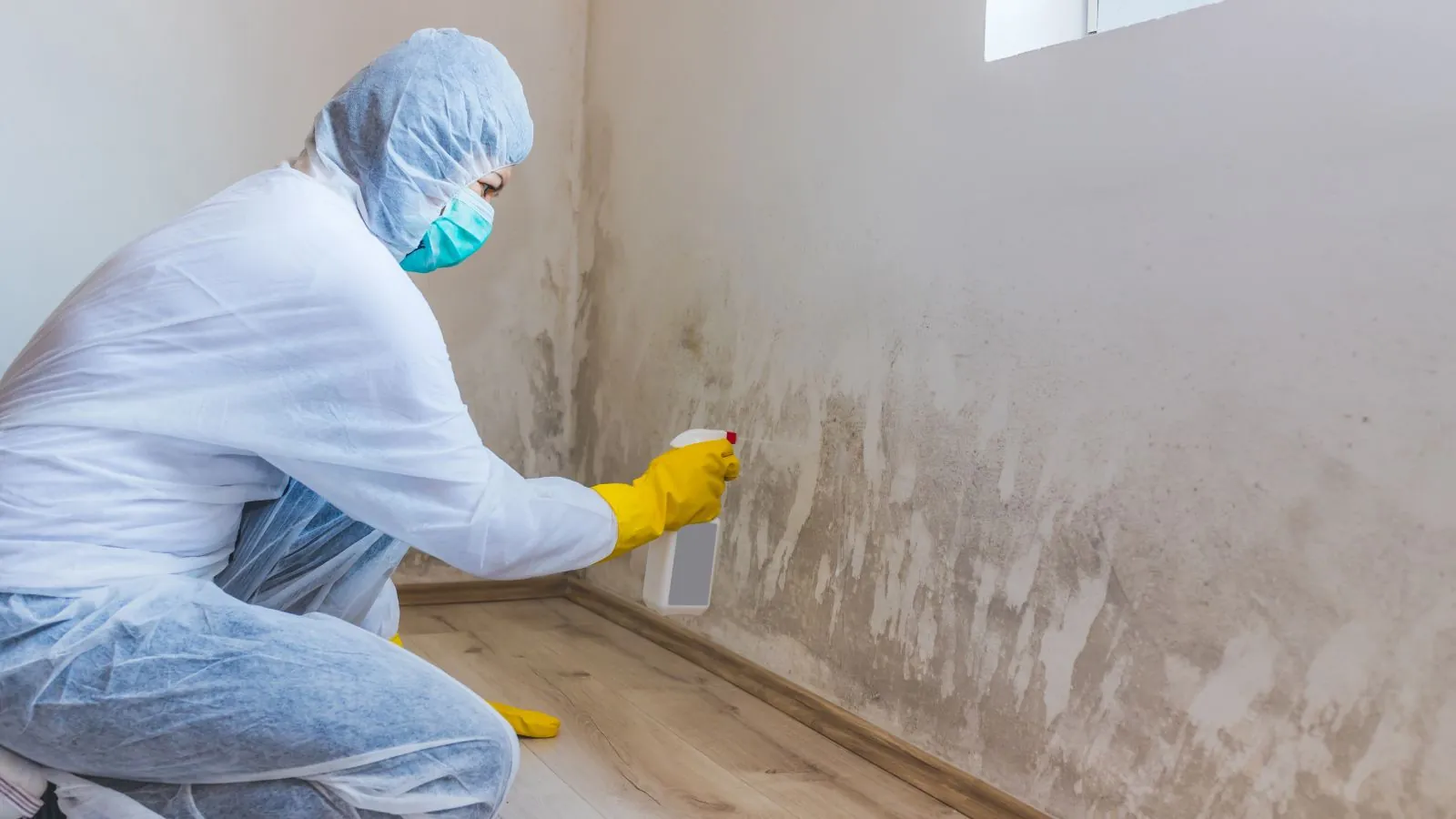
Black mold removal cost depends on how large the affected area is, what material it grew on, how much containment is needed and whether the moisture source is fixed. There is no honest flat price, because a small patch on a bathroom ceiling and mold behind a flooded basement wall are different jobs.
We will not quote numbers here, because any figure given without seeing the home would be a guess. What we can give you is the list of factors that move a price, so you can compare quotes fairly and spot a quote that leaves things out.
The area and the material decide the work
Mold on a hard, nonporous surface such as tile or sealed metal can often be cleaned. Mold in drywall, insulation, carpet or wood is a harder problem, because those materials hold moisture and the growth goes below the surface. Porous materials are often removed instead of cleaned.
That is why a quote begins with square footage and material. Removing and replacing a few feet of drywall is a very different job from opening a whole wall cavity, and the written scope should say which one is planned.
Containment and air handling add labor
Good remediation keeps spores from drifting into clean rooms. Crews seal the work area with plastic sheeting, set negative air machines with filters and protect floors and doors. This takes setup time before any mold is touched.
The published ANSI/IICRC S520 standard describes this kind of controlled practice. A quote that skips containment entirely for more than a tiny spot is worth questioning. Ask what containment is planned and how it will be removed afterward.
Call the 24/7 line. We explain how the scope is built, and the price, before any work starts.
Testing and clearance are separate line items
Some homeowners want testing before work to confirm what is present, and some lenders or buyers want clearance testing after work. Testing is usually a separate service from removal and is often best done by an independent party, so the person who tests is not the person who removes.
Ask whether a quote includes testing, and if so who performs it. Also ask what result would count as passing. Do not rely on a promise about outcomes, since any test only describes the air or surface on the day it was taken.
What typically raises or lowers a quote
| Factor | Effect on the quote |
|---|---|
| Size of the affected area | Larger areas need more labor, materials and disposal |
| Material involved | Porous materials such as drywall and insulation are often removed and replaced |
| Location in the home | Attics, crawl spaces and finished basements are harder to contain and reach |
| Containment needed | Plastic barriers, filtered air machines and setup time add labor |
| Moisture source still active | The leak must be fixed first, or growth can return |
| Rebuild after removal | Drywall, paint and flooring replacement is usually separate |
| Testing and clearance | Often a separate line item performed by a different party |
Why the moisture source belongs in the quote
Mold needs moisture to grow. If a quote removes mold but says nothing about the leak, condensation line or humidity that fed it, the same conditions remain. We never say that mold will not come back, and a quote that promises it should raise a question.
A responsible scope names the source and who is fixing it. It also covers drying. If the area is still wet, equipment and moisture readings belong in the plan, and that is where structural drying work fits in the sequence.
Questions to ask every company that quotes
- What is the exact area and which materials are included?
- What containment and air filtration are planned?
- Who is responsible for fixing the moisture source?
- Is testing or clearance included, and who performs it?
- Does the quote include rebuilding, or only removal?
- Do your crews work to the ANSI/IICRC S520 standard?
Ask each company the same questions and compare the answers side by side. The cheapest quote is only a bargain if it covers the same work.
Why the lowest quote can cost more
A low quote sometimes leaves out containment, disposal or the moisture fix. If the work is done without barriers, spores can spread into clean rooms and the problem grows. If the leak is not fixed, growth can return and the money is spent twice.
Compare quotes line by line. A quote that lists the area, the materials, the containment, the disposal and the clearance step is easier to trust than one that offers a single lump sum with no detail.
How insurance fits in
Some policies respond to mold that follows a covered water loss, and others limit or exclude it. Check your policy or ask your insurer, and report the water loss quickly, since the sequence of events matters. We do not promise coverage and never state a payout.
If the mold came from a long-term leak, expect more questions. Keep photos, invoices and dates, and ask your insurer what documentation it wants before work begins.
What affects mold quotes in a Bellmore home
Bellmore homes in the low ground south of Merrick Road have a history of storm flooding. Local press reported several feet of water in parts of South Bellmore during Hurricane Sandy in 2012. If your home took on water in an event like that, ask any remediation company whether it checked inside wall cavities, because hidden wet material changes the scope.
The Town of Hempstead Building Department enforces plumbing and electrical codes and runs the permit center for repair work. If a mold job leads to rebuilding walls, ask the department what permits apply, because permit rules vary and the rebuild is usually priced apart from removal.
Our mold remediation page explains the process in more detail, and the structural drying page explains why moisture work comes first. We also serve Freeport and the rest of the service area.
Frequently asked questions
No honest company can price mold work without seeing it. We explain how the scope is built, and the price is explained before work starts.
Quotes may cover different areas, different materials or different containment. Ask each company to list exactly what is included.
Often it is separate. Ask who tests, when and what result counts as passing.
Yes. Mold needs moisture, so the source has to be repaired, and the area has to be dried, for the work to make sense.
Sometimes. Removal and rebuilding are often separate scopes, so ask whether the quote includes replacing drywall and finishes.
It can. Water that sat in walls or under flooring may have reached hidden areas, so ask the company to describe how it will check them.
Call the line any hour and describe what you see. We will explain the scope and price before work starts.